English
 Español
 tiếng việt
 русский
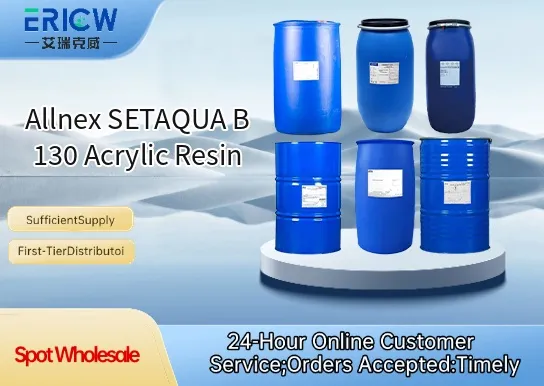
Waterborne acrylic dispersion offering excellent clarity and gloss retention.
Low VOC formulation compliant with stringent global environmental regulations.
Good hydrolytic stability and freeze-thaw resistance for reliable storage and handling.
Enables high film hardness and scratch resistance in cured coatings.
Compatible with common coalescents and crosslinkers for formulation flexibility.
Architectural interior wall paints requiring low odor and high durability.
Wood coatings for furniture and cabinetry where clarity and yellowing resistance are critical.
Metal primers and topcoats for general industrial applications.
Plastic coatings for appliances and consumer electronics.
Recycled-content or bio-based coating systems seeking performance without compromise.
| Chemical Type | Acrylic copolymer dispersion |
| Product Form | White to slightly bluish opaque liquid |
| Appearance | Homogeneous, free of sediment or gel particles |
| Solids Content (wt %) | 48.0 ± 1.0 |
| pH | 7.5 – 8.5 |
| Viscosity (mPa·s, Brookfield RVT, spindle #2, 20 rpm) | 150 – 600 |
| Density (g/cm³, 25 °C) | 1.02 – 1.05 |
| Minimum Film Formation Temperature (MFFT) | 22 °C |
Q1: What is the primary application field for SETAQUA B 130?
A: SETAQUA B 130 is a waterborne acrylic resin specifically designed for high-performance industrial maintenance and protective coatings, including metal primers, topcoats, and general-purpose architectural and maintenance finishes where low VOC, fast drying, and good corrosion resistance are required.
Q2: Is SETAQUA B 130 compatible with common crosslinkers used in ambient-cure systems?
A: Yes, SETAQUA B 130 is formulated to be compatible with standard ambient-cure crosslinkers such as melamine-formaldehyde resins and blocked isocyanates, enabling robust film formation and enhanced chemical resistance without requiring thermal curing.
Q3: How does SETAQUA B 130 perform in terms of water resistance and alkali stability?
A: As a carboxyl-functional acrylic dispersion, SETAQUA B 130 offers good hydrolytic stability and moderate resistance to neutral and mildly alkaline conditions, making it suitable for formulations exposed to typical outdoor weathering and light cleaning agents — though prolonged exposure to strong alkalis should be avoided.
Q4: Can SETAQUA B 130 be used in pigmented or unpigmented systems?
A: Yes, SETAQUA B 130 demonstrates excellent pigment compatibility and rheological stability in both pigmented and clear coat systems, supporting consistent dispersion and minimal settling across a broad range of inorganic and organic pigments.
Contact With Us:
E-mail: wangxingqiang@ericwchem.com
Have a Questions? Call Us:
Add:
Building A1, Jiete Industrial Park, Huangpu District, Guangzhou City, Guangdong Province, China