English
 Español
 tiếng việt
 русский
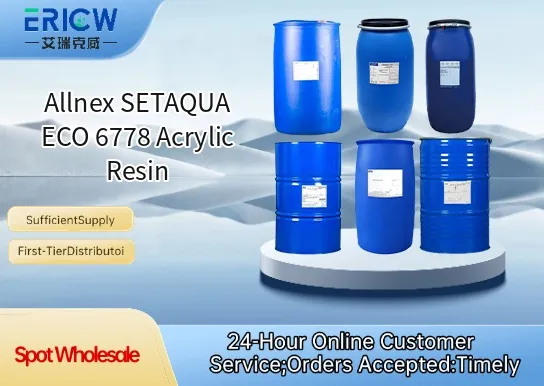
Waterborne acrylic dispersion with low VOC and zero APEO formulation.
Excellent film formation at ambient temperature without coalescent aid.
High gloss retention and outstanding UV resistance for long-term durability.
Good compatibility with common waterborne crosslinkers and additives.
Low odor and improved workplace safety profile versus solvent-based alternatives.
Architectural interior and exterior wall paints.
Industrial maintenance coatings for metal substrates.
Wood coatings requiring clarity, hardness, and yellowing resistance.
Plastic coatings for ABS and PC substrates.
High-performance clearcoats in automotive refinish and OEM applications.
| Chemical Type | Acrylic copolymer dispersion |
| Product Form | White to slightly bluish opaque liquid |
| Appearance | Homogeneous aqueous dispersion |
| Non-Volatile Content (wt. %) | 45 ± 1 |
| pH (at 25°C) | 8.0 – 9.0 |
| Viscosity (mPa·s, Brookfield RVT, #2 spindle, 20 rpm) | 150 – 350 |
| Density (g/cm³, 20°C) | 1.02 – 1.05 |
| Particle Size (D50, nm) | 120 – 180 |
Q1: What is the primary application area for SETAQUA ECO 6778?
A: SETAQUA ECO 6778 is a waterborne acrylic resin specifically engineered for high-performance, low-VOC industrial coatings—particularly in metal packaging (e.g., food and beverage cans), coil coatings, and general-purpose protective coatings where excellent corrosion resistance, gloss retention, and adhesion to pretreated metals are required.
Q2: Is SETAQUA ECO 6778 compatible with common crosslinkers used in can coating systems?
A: Yes, it is formulated to be compatible with standard amino resins (e.g., melamine-formaldehyde) and alternative low-formaldehyde or formaldehyde-free crosslinkers. Compatibility and cure performance should be verified experimentally within the final formulation due to system-specific variables such as pH, solids content, and catalyst selection.
Q3: How does SETAQUA ECO 6778 contribute to sustainability goals in coating formulations?
A: As a waterborne acrylic resin, it enables significant VOC reduction versus solvent-based alternatives. It is also part of Allnex’s ECO portfolio, meaning it is designed with bio-based raw materials where technically feasible and manufactured using energy-efficient processes aligned with industry sustainability benchmarks.
Q4: What substrate preparation is recommended before applying coatings based on SETAQUA ECO 6778?
A: Optimal performance requires clean, degreased, and properly pretreated metal substrates—typically chromated or non-chromated conversion coatings (e.g., zirconium- or titanium-based) for tinplate or aluminum. Surface cleanliness and consistent pretreatment quality are critical for adhesion and corrosion protection.
Contact With Us:
E-mail: wangxingqiang@ericwchem.com
Have a Questions? Call Us:
Add:
Building A1, Jiete Industrial Park, Huangpu District, Guangzhou City, Guangdong Province, China