English
 Español
 tiếng việt
 русский
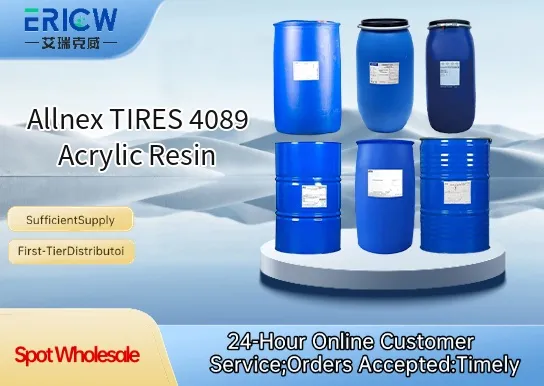
High solids content for improved VOC compliance and coating efficiency.
Excellent pigment wetting and dispersion stability in waterborne systems.
Outstanding alkali resistance, enabling compatibility with cementitious substrates.
Good film formation at ambient temperatures without coalescent aids.
Enhanced scrub resistance and durability in demanding architectural and industrial topcoats.
Waterborne exterior wall coatings for concrete and masonry.
High-performance elastomeric roof coatings.
Interior architectural paints requiring low-odor, low-VOC performance.
Anti-carbonation protective coatings for reinforced concrete structures.
Basecoats in multi-layer façade systems for commercial buildings.
| Chemical Type | Acrylic copolymer emulsion |
| Product Form | White to slightly bluish opaque liquid |
| Appearance | Homogeneous milky dispersion |
| Solids Content (wt %) | 48.0 ± 1.0 |
| pH (at 25°C) | 8.0 – 9.0 |
| Minimum Film Formation Temperature (MFFT) | ≈ 12°C |
| Viscosity (Brookfield RVT, #2 spindle, 20 rpm) | 100 – 300 mPa·s |
| Particle Size (D50) | 120 – 160 nm |
Q1: What is the primary function of TIRES 4089 in tire and rubber compound formulations?
A: TIRES 4089 is a specialty acrylic resin designed to act as a processing aid and tackifier in rubber compounds—particularly for high-performance tire treads and sidewalls—improving green strength, calendering behavior, and filler dispersion without compromising vulcanization kinetics.
Q2: Is TIRES 4089 compatible with common elastomers used in tire manufacturing?
A: Yes, TIRES 4089 demonstrates good compatibility with natural rubber (NR), styrene-butadiene rubber (SBR), butadiene rubber (BR), and their blends—making it suitable for both passenger and commercial vehicle tire compounds.
Q3: How should TIRES 4089 be incorporated into a rubber formulation?
A: It is typically added during the non-productive mixing stage (e.g., masterbatch preparation) at elevated temperatures. Due to its thermoplastic nature, it disperses readily and does not require pre-dissolution or special handling beyond standard dry-blend or hot-melt integration practices.
Q4: Does TIRES 4089 affect the final vulcanized properties of the rubber?
A: When used within recommended dosage ranges, TIRES 4089 does not interfere with crosslink density or scorch safety. It contributes to improved tensile strength and abrasion resistance in cured compounds while maintaining dynamic performance characteristics such as rolling resistance and wet grip.
Contact With Us:
E-mail: wangxingqiang@ericwchem.com
Have a Questions? Call Us:
Add:
Building A1, Jiete Industrial Park, Huangpu District, Guangzhou City, Guangdong Province, China