English
 Español
 tiếng việt
 русский
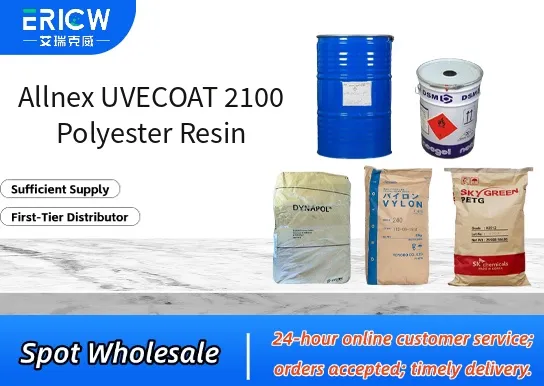
High reactivity in UV-curable coatings for rapid through-cure and excellent surface hardness.
Low viscosity enabling high-solids formulation and improved film build without solvents.
Excellent weathering resistance and gloss retention under accelerated UV exposure.
Good adhesion to diverse substrates including plastics, metals, and wood composites.
Compatible with common photoinitiators and multifunctional acrylates for broad formulating flexibility.
UV-cured clearcoats for automotive interior trim and instrument panels.
Protective topcoats for wood flooring and engineered hardwood surfaces.
High-gloss decorative coatings on plastic consumer electronics housings.
Functional coatings for metal packaging and premium appliance finishes.
Industrial UV overprint varnishes for rigid packaging and signage substrates.
| Chemical Type | Unsaturated polyester acrylate (urethane-modified) |
| Product Form | Liquid resin |
| Appearance | Pale yellow, clear liquid |
| Primary Applications | UV-curable protective and decorative topcoats |
| Key Features | High reactivity, low VOC, excellent hardness development |
| Benefits | Energy-efficient curing, superior scratch resistance, broad substrate adhesion |
| Storage Conditions | Store in cool, dry place below 30°C; protect from light and moisture |
| Shelf Life | 12 months from date of manufacture when stored properly |
Q1: What is the primary application of UVECOAT 2100 in UV-curable systems?
A: UVECOAT 2100 is a low-viscosity, trifunctional polyester acrylate resin designed primarily as a reactive diluent and film-forming binder in UV-curable coatings for industrial wood, plastic, and metal substrates—offering good hardness, flexibility, and surface cure response.
Q2: How does UVECOAT 2100 compare to epoxy acrylates in terms of flexibility and chemical resistance?
A: Compared to standard epoxy acrylates, UVECOAT 2100 delivers enhanced flexibility and reduced brittleness while maintaining robust solvent and abrasion resistance—making it especially suitable for applications requiring impact resistance and substrate adhesion on flexible or thermally stressed parts.
Q3: Is UVECOAT 2100 compatible with common photoinitiators used in free-radical UV curing?
A: Yes, UVECOAT 2100 demonstrates broad compatibility with standard Type I (e.g., α-hydroxyketones) and Type II (e.g., benzophenone-based) photoinitiators, enabling efficient surface and through-cure across a range of lamp technologies including LED and mercury-vapor sources.
Q4: Can UVECOAT 2100 be blended with other resins to modify performance?
A: Yes, it is commonly blended with mono- or difunctional acrylates to adjust viscosity and reactivity, or with urethane acrylates to enhance toughness and mar resistance—formulation synergy should be verified through small-scale cure and performance testing.
Contact With Us:
E-mail: wangxingqiang@ericwchem.com
Have a Questions? Call Us:
Add:
Building A1, Jiete Industrial Park, Huangpu District, Guangzhou City, Guangdong Province, China