English
 Español
 tiếng việt
 русский
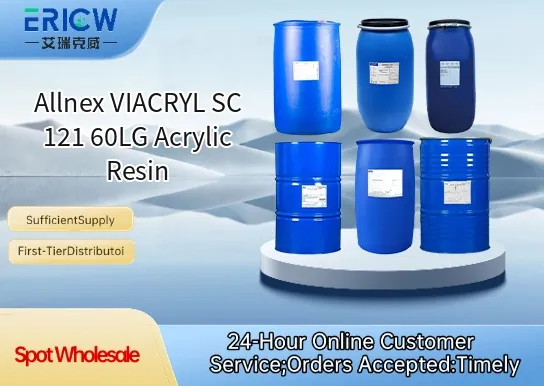
High-solids, low-VOC acrylic dispersion for sustainable industrial coatings.
Excellent pigment wetting and rheology control in waterborne formulations.
Superior hardness and mar resistance after ambient or low-bake curing.
Good compatibility with crosslinkers such as melamine and polyisocyanates.
Stable viscosity profile across broad pH and temperature ranges during storage.
Waterborne industrial maintenance coatings for metal substrates.
Architectural and decorative interior wall paints requiring scrub resistance.
Plastic coatings for ABS and PC substrates in automotive trim applications.
Low-bake coil coatings for pre-finished building panels and appliances.
General-purpose waterborne wood finishes for furniture and cabinetry.
| Chemical Type | Acrylic copolymer dispersion |
| Product Form | White to slightly yellow opaque liquid |
| Appearance | Homogeneous, low-viscosity dispersion |
| Solids Content (wt%) | 60 ± 1 % |
| pH | 8.0 – 9.0 |
| Viscosity (mPa·s, Brookfield RVT, spindle #3, 20 rpm) | 500 – 1,500 |
| Density (g/cm³ at 25 °C) | 1.02 – 1.05 |
| Minimum Film Formation Temperature (MFFT) | ~15 °C |
Q1: What is the primary function of VIACRYL SC 121 60LG in coating formulations?
A: VIACRYL SC 121 60LG is a waterborne acrylic resin designed primarily as a film-forming binder and rheology modifier in high-performance industrial and protective coatings. It contributes to improved scrub resistance, gloss retention, and substrate adhesion while supporting low-VOC formulation goals.
Q2: Is VIACRYL SC 121 60LG compatible with common co-binders and crosslinkers used in ambient-cure systems?
A: Yes — it demonstrates good compatibility with a range of ambient-cure co-binders including melamine formaldehydes, aziridines, and carbodiimides, as well as with other waterborne acrylics, polyurethane dispersions, and epoxy emulsions. Compatibility testing under specific formulation conditions is recommended prior to full-scale implementation.
Q3: How should VIACRYL SC 121 60LG be incorporated into a water-based coating system?
A: It is typically added during the let-down stage, after pigment grinding, under moderate agitation. To avoid destabilization, avoid high-shear mixing or direct addition to highly acidic or alkaline components. pH adjustment (if needed) should be performed gradually and within the recommended stability range of approximately 7.5–9.0.
Q4: Does this resin require post-addition neutralization or pH adjustment for optimal performance?
A: VIACRYL SC 121 60LG is supplied pre-neutralized and ready for use in most standard waterborne systems. Additional neutralization is generally not required unless the overall formulation pH falls outside its stable operating window — in such cases, mild amine-based adjusters may be used cautiously.
Q5: Can VIACRYL SC 121 60LG be used in food-contact compliant coatings?
A: While VIACRYL SC 121 60LG is formulated without intentionally added heavy metals or alkylphenol ethoxylates, it is not pre-certified for food-contact applications. End-use compliance depends on the full formulation, processing conditions, and applicable regional regulatory requirements — formal evaluation by a qualified regulatory expert is necessary before claiming food-contact suitability.
Contact With Us:
E-mail: wangxingqiang@ericwchem.com
Have a Questions? Call Us:
Add:
Building A1, Jiete Industrial Park, Huangpu District, Guangzhou City, Guangdong Province, China