English
 Español
 tiếng việt
 русский
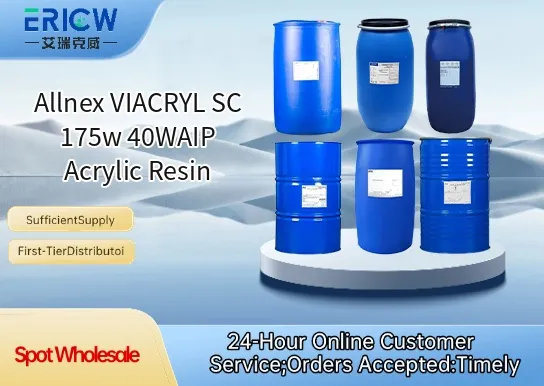
Waterborne acrylic dispersion with excellent film formation at ambient temperature.
Low VOC content, compliant with stringent global environmental regulations.
Good alkali resistance and hydrolytic stability in formulated systems.
Provides balanced hardness and flexibility for durable coating performance.
Compatible with common coalescents and additives used in architectural and industrial coatings.
Interior and exterior architectural wall paints.
Waterborne maintenance coatings for metal substrates.
Primers and mid-coats in industrial wood finishing systems.
Low-odor, low-VOC decorative coatings for healthcare and education facilities.
Base formulations for tintable decorative coatings requiring good scrub resistance.
| Chemical Type | Acrylic copolymer dispersion |
| Product Form | White to slightly bluish opaque liquid |
| Appearance | Homogeneous aqueous dispersion |
| Solids Content (wt%) | 40 ± 1% |
| pH (at 25°C) | 8.0 – 9.0 |
| Viscosity (mPa·s, Brookfield RVT, Spindle #2, 20 rpm) | 100 – 500 |
| Minimum Film Formation Temperature (MFFT) | ~20°C |
| Primary Applications | Architectural & industrial waterborne coatings |
Q1: What is the primary function of VIACRYL SC 175w 40WAIP in waterborne coating systems?
A: VIACRYL SC 175w 40WAIP is a self-crosslinking acrylic resin designed to enhance film formation, hardness development, and chemical resistance in ambient-cure or low-bake waterborne coatings—particularly for industrial wood, plastic, and metal applications.
Q2: Is this resin compatible with common waterborne resins and additives?
A: Yes, VIACRYL SC 175w 40WAIP exhibits good compatibility with standard waterborne acrylics, polyurethane dispersions (PUDs), and common rheology modifiers, defoamers, and coalescing agents—though compatibility testing under specific formulation conditions is recommended prior to full-scale use.
Q3: What curing mechanism does VIACRYL SC 175w 40WAIP rely on?
A: It features built-in self-crosslinking functionality via reactive functional groups (e.g., carbonyl and/or amine-reactive moieties), enabling coalescence-assisted ambient crosslinking without requiring external catalysts or high-temperature baking—though thermal acceleration may improve final film properties.
Q4: How should VIACRYL SC 175w 40WAIP be incorporated into a waterborne formulation?
A: It is typically added during the let-down stage under moderate agitation. As a stable aqueous dispersion, it can be blended directly with other waterborne components; pH adjustment may be necessary depending on the overall formulation balance.
Q5: Does VIACRYL SC 175w 40WAIP contribute to improved substrate adhesion?
A: Yes, its molecular architecture supports strong interfacial interaction with diverse substrates—including low-surface-energy plastics and treated metals—resulting in enhanced initial grab and long-term adhesion performance in demanding end-use environments.
Contact With Us:
E-mail: wangxingqiang@ericwchem.com
Have a Questions? Call Us:
Add:
Building A1, Jiete Industrial Park, Huangpu District, Guangzhou City, Guangdong Province, China