English
 Español
 tiếng việt
 русский
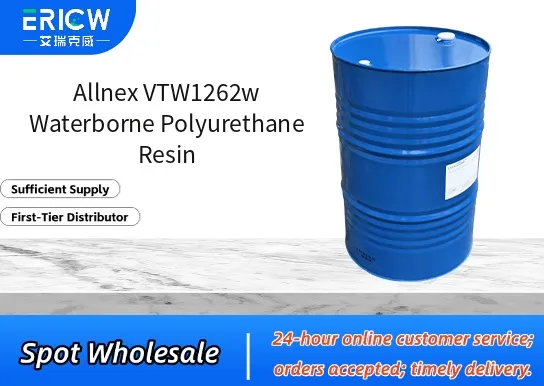
High-performance waterborne polyurethane dispersion offering excellent film hardness and scratch resistance.
Low VOC formulation compliant with stringent global environmental regulations including EU REACH and US EPA guidelines.
Outstanding hydrolytic stability and storage stability up to 12 months at 5–30 °C.
Good compatibility with acrylic dispersions, cellulose derivatives, and common coalescing agents.
Enables high-gloss, clear films with low yellowing tendency upon UV exposure and thermal aging.
Waterborne wood coatings for furniture, flooring, and cabinetry.
High-end industrial maintenance coatings for metal substrates.
Leather finishing topcoats requiring flexibility, breathability, and abrasion resistance.
Plastic coatings for ABS, PC, and PVC substrates in automotive interior trim.
Specialty packaging coatings demanding FDA-compliant indirect food contact suitability (when formulated accordingly).
| Chemical Type | Anionic aliphatic polyurethane dispersion |
| Product Form | Ready-to-use aqueous dispersion |
| Appearance | Translucent, slightly bluish milky liquid |
| pH (at 25 °C) | 7.8 – 8.4 |
| Solids Content (wt%) | 30.0 ± 1.0 |
| Viscosity (mPa·s, Brookfield RVT, #2 spindle, 20 rpm, 25 °C) | 150 – 400 |
| Particle Size (D50, nm) | 80 – 120 |
| Minimum Film Formation Temperature (MFFT, °C) | 18 – 22 |
Q1: What is the primary application area for VTW1262w?
A: VTW1262w is specifically designed as a film-forming binder in high-performance waterborne coatings for flexible substrates—especially in textile, leather, and synthetic fabric finishing where durability, flexibility, and low-temperature film formation are critical.
Q2: Can VTW1262w be used without crosslinkers?
A: Yes, VTW1262w forms coherent, abrasion-resistant films on its own due to its self-crosslinking capability. However, performance properties such as chemical resistance or wash-fastness can be further enhanced with compatible external crosslinkers like aziridines or carbodiimides, depending on the end-use requirements.
Q3: How should VTW1262w be incorporated into a formulation?
A: It is typically added during the let-down stage under gentle agitation. Avoid high-shear mixing after addition to prevent destabilization. Compatibility with other waterborne resins, pigments, and additives should be verified experimentally, as performance depends on overall system balance and pH stability.
Q4: Is VTW1262w suitable for applications requiring low VOC and regulatory compliance?
A: Yes, VTW1262w is a true waterborne polyurethane dispersion with negligible organic solvent content, supporting formulators in meeting stringent global VOC regulations and sustainability targets for industrial and consumer-facing coating systems.
Contact With Us:
E-mail: wangxingqiang@ericwchem.com
Have a Questions? Call Us:
Add:
Building A1, Jiete Industrial Park, Huangpu District, Guangzhou City, Guangdong Province, China