English
 Español
 tiếng việt
 русский
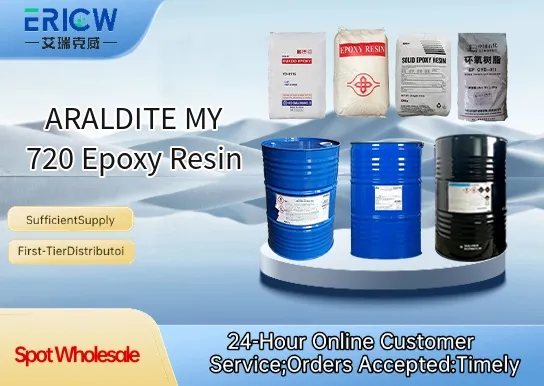
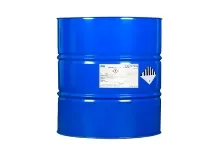
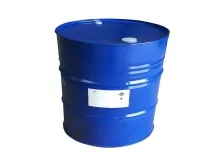
High-purity liquid bisphenol-A epoxy resin with low chloride content for superior electrical insulation performance.
Excellent compatibility with a wide range of amine and anhydride hardeners, enabling flexible formulation design.
Low viscosity (10,000–14,000 mPa·s at 25 °C) ensures easy handling, degassing, and impregnation of fibrous reinforcements.
Outstanding thermal stability and chemical resistance after full cure, suitable for demanding industrial environments.
Consistent batch-to-batch quality certified to ISO 9001 standards, ensuring reliable processing and end-product performance.
Electrical insulation systems for high-voltage transformers and reactors.
Encapsulation and potting of power electronics, including IGBT modules and EV inverters.
Impregnation of glass fiber and carbon fiber laminates in aerospace and wind turbine composite components.
Structural adhesives and matrix resins for high-performance composites requiring dimensional stability under thermal cycling.
Coating formulations for corrosion-resistant linings in chemical processing equipment.
| Chemical Type | Bisphenol-A based liquid epoxy resin |
| Product Form | Clear, pale yellow viscous liquid |
| Appearance | Transparent to slightly hazy, free from gels or suspended particles |
| Epoxy Equivalent Weight (EEW) | 185–192 g/eq |
| Viscosity (25 °C) | 10,000–14,000 mPa·s |
| Chloride Content | ≤ 750 ppm |
| Softening Point | 10–15 °C |
| Storage Stability (25 °C) | ≥ 12 months in sealed containers |
Q1: What is the primary function of ARALDITE MY 720 in epoxy formulations?
A: ARALDITE MY 720 is a liquid bisphenol-A based epoxy resin used primarily as a reactive diluent and viscosity modifier. It helps reduce formulation viscosity without significantly compromising final crosslink density or thermal performance, enabling improved processability in casting, impregnation, and adhesive applications.
Q2: Is ARALDITE MY 720 compatible with standard amine and anhydride hardeners?
A: Yes, ARALDITE MY 720 exhibits broad compatibility with common epoxy curing agents, including aliphatic and aromatic amines, as well as cyclic anhydrides. Its reactivity profile supports conventional cure schedules, though optimal stoichiometry and post-cure conditions should be confirmed experimentally for each specific system.
Q3: How does ARALDITE MY 720 compare to other low-viscosity epoxy resins like MY 0510 or DGEBA-based monomers?
A: Compared to higher-molecular-weight DGEBA resins, ARALDITE MY 720 offers lower viscosity and enhanced wetting capability, while retaining good mechanical strength and chemical resistance after curing. Unlike some monofunctional diluents, it contributes two epoxide groups per molecule, supporting higher crosslink density and better thermal stability than non-reactive or mono-epoxy modifiers.
Q4: Can ARALDITE MY 720 be used in high-performance composite laminates?
A: Yes — it is frequently employed in prepreg and infusion systems where low resin viscosity and controlled reactivity are critical. When combined with appropriate hardeners and reinforcements, it delivers balanced toughness, interlaminar shear strength, and dimensional stability suitable for aerospace- and wind energy-related structural composites.
Contact With Us:
E-mail: wangxingqiang@ericwchem.com
Have a Questions? Call Us:
Add:
Building A1, Jiete Industrial Park, Huangpu District, Guangzhou City, Guangdong Province, China