English
 Español
 tiếng việt
 русский
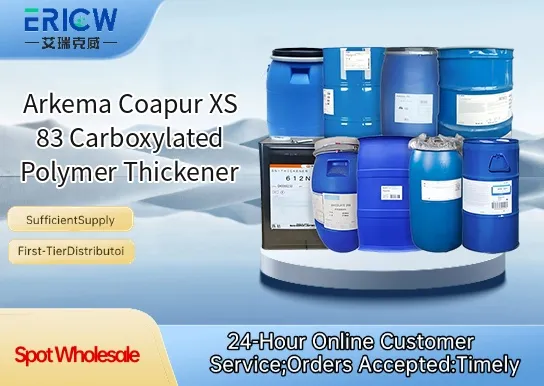
High-efficiency rheology modifier delivering excellent viscosity build and shear-thinning behavior in waterborne systems.
Carboxylated acrylic polymer structure ensures robust pH stability across typical formulation ranges (pH 6–10).
Low VOC and APEO-free, supporting compliance with stringent environmental and regulatory standards.
Excellent compatibility with common surfactants, co-thickeners, and functional additives in architectural and industrial coatings.
Provides outstanding sag resistance and leveling balance without compromising open time or film formation.
Architectural interior and exterior latex paints.
Waterborne industrial maintenance coatings.
Textile printing pastes and pigment dispersions.
Adhesives and construction sealants requiring non-ionic thickening performance.
Wood stains and transparent decorative finishes.
| Chemical Type | Carboxylated acrylic copolymer |
| Product Form | Aqueous dispersion |
| Appearance | Opaque white liquid |
| pH (1% aqueous solution) | 3.5–4.5 |
| Solids Content (wt%) | 30.0 ± 1.0 |
| Viscosity (Brookfield RVT, spindle #3, 20 rpm, 25°C) | 500–1500 mPa·s |
| Primary Applications | Waterborne coatings, inks, adhesives |
| Key Features | Rheology control, pH stability, low foam generation |
Q1: What is the primary thickening mechanism of Coapur XS 83 in aqueous systems?
A: Coapur XS 83 functions as a water-soluble, carboxylated associative thickener. Its viscosity-building action arises from both electrostatic repulsion between ionized carboxyl groups and hydrophobic association between pendant alkyl chains, enabling efficient rheology control across a broad pH range.
Q2: How does Coapur XS 83 differ from non-associative carboxylated thickeners in performance?
A: Unlike conventional polyacrylic acid thickeners, Coapur XS 83 delivers enhanced shear-thinning behavior, improved sag resistance in vertical applications, and better tolerance to electrolytes and surfactants due to its designed hydrophobic modification and balanced anionic character.
Q3: Is Coapur XS 83 compatible with common biocides used in architectural coatings?
A: Yes — Coapur XS 83 exhibits good compatibility with standard isothiazolinone- and formaldehyde-releasing biocides when incorporated at typical use levels. As with all polymer additives, it is recommended to evaluate final formulation stability under intended storage conditions.
Q4: What is the recommended method for incorporating Coapur XS 83 into a water-based formulation?
A: For optimal dispersion and performance, Coapur XS 83 should be added during the let-down stage, typically after pigments and fillers are fully dispersed. It is generally introduced as a pre-diluted solution (e.g., 10–20% in water or glycol/water mixtures) under moderate agitation to avoid localized overdosing and ensure uniform distribution.
Contact With Us:
E-mail: wangxingqiang@ericwchem.com
Have a Questions? Call Us:
Add:
Building A1, Jiete Industrial Park, Huangpu District, Guangzhou City, Guangdong Province, China