English
 Español
 tiếng việt
 русский
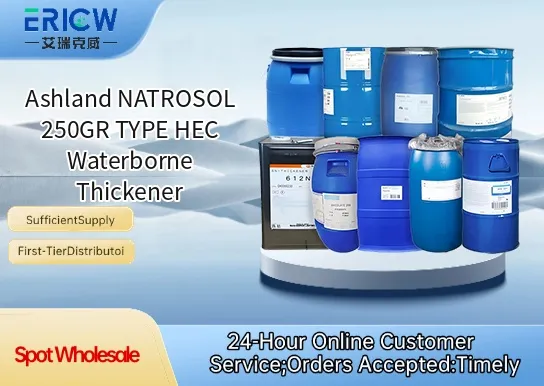
High-performance hydroxyethyl cellulose (HEC) thickener delivering excellent viscosity build and rheology control in waterborne systems.
Non-ionic, compatible with anionic surfactants, biocides, and common co-thickeners—ideal for stable, multi-component formulations.
Provides outstanding sag resistance and leveling in architectural coatings without compromising open time or brushability.
Low foam generation and excellent shear-thinning behavior, supporting efficient high-shear processing and spray application.
Consistent batch-to-batch performance with reliable hydration kinetics and minimal gel particle formation.
Architectural interior and exterior latex paints.
Waterborne industrial maintenance coatings.
Adhesives and construction sealants.
Tile grouts and cement-based repair mortars.
Water-based inks and graphic arts formulations.
| Chemical Type | Hydroxyethyl cellulose (HEC) |
| Product Form | Free-flowing white to off-white granular powder |
| Appearance | Free-flowing granules, no visible lumps or discoloration |
| Primary Applications | Waterborne architectural coatings, adhesives, construction mortars |
| Key Features | Non-ionic, cold-water dispersible, low foam, high pseudoplasticity |
| Benefits | Improved sag resistance, enhanced leveling, compatibility with broad additive systems |
| pH Range (1% aqueous solution) | 5.5 – 8.5 |
| Viscosity (1% solution, 25°C, Brookfield RVT, spindle #3, 30 rpm) | 2,200 – 2,800 mPa·s |
Q1: What is the primary function of NATROSOL 250GR in waterborne formulations?
A: NATROSOL 250GR is a hydroxyethyl cellulose (HEC) thickener designed to provide efficient rheology control—enhancing viscosity, improving sag resistance, and stabilizing aqueous systems without significantly affecting gloss or film formation.
Q2: How does NATROSOL 250GR differ from other HEC grades like 250HHX or 250M?
A: NATROSOL 250GR is specifically engineered for waterborne coatings and architectural paints, offering balanced water retention, moderate shear-thinning behavior, and good compatibility with common co-thickeners and surfactants—making it especially suitable for low-VOC and high-solids systems where ease of incorporation and stability are critical.
Q3: Is NATROSOL 250GR compatible with biocides and other additives commonly used in architectural coatings?
A: Yes, NATROSOL 250GR demonstrates broad compatibility with standard preservatives, defoamers, dispersants, and associative thickeners when used within typical formulation pH and ionic strength ranges. However, pre-testing in the final system is recommended to confirm performance under specific conditions.
Q4: What is the recommended method for incorporating NATROSOL 250GR into a waterborne formulation?
A: For optimal dispersion and hydration, NATROSOL 250GR is typically added as a dry powder under high-shear mixing directly into the aqueous phase—or pre-dispersed in a non-solvent (e.g., propylene glycol) before addition. Avoid introducing undispersed powder into low-shear or highly viscous phases to prevent fisheyes or agglomerates.
Q5: Does NATROSOL 250GR offer any benefits related to water retention in cementitious or plaster-based systems?
A: While primarily optimized for latex-based paints and coatings, NATROSOL 250GR contributes useful water retention properties in waterborne construction adhesives and thin-set mortars—helping maintain workability and support proper cement hydration during early curing stages.
Contact With Us:
E-mail: wangxingqiang@ericwchem.com
Have a Questions? Call Us:
Add:
Building A1, Jiete Industrial Park, Huangpu District, Guangzhou City, Guangdong Province, China