English
 Español
 tiếng việt
 русский
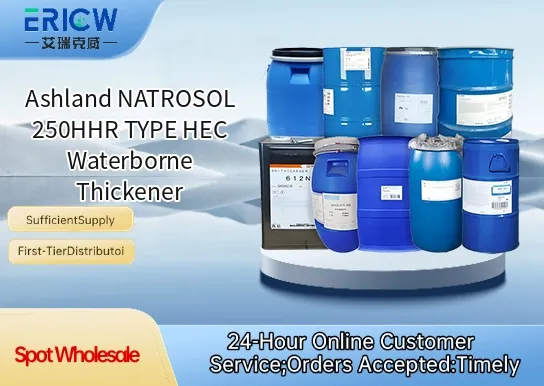
High-shear rheology profile with excellent sag resistance and leveling performance in waterborne coatings.
Enhanced compatibility with common co-thickeners, surfactants, and biocides in architectural and industrial formulations.
Consistent thickening efficiency across pH range 3–12, supporting broad formulation flexibility.
Low foam generation during high-speed mixing and application, minimizing defoamer dependency.
Non-ionic, cellulose-based polymer offering good film integrity and reduced water sensitivity in dried films.
Interior and exterior architectural latex paints.
Waterborne wood stains and clear finishes.
Industrial maintenance coatings for metal and concrete substrates.
Water-based adhesives and construction sealants.
Textile printing pastes and pigment dispersions.
| Chemical Type | Hydroxyethyl cellulose (HEC) |
| Product Form | Free-flowing white to off-white powder |
| Appearance | Granular or fine particulate powder |
| Primary Applications | Waterborne coatings, adhesives, and construction chemicals |
| Key Features | High-HR (High Rheology) grade with enhanced pseudoplasticity |
| Benefits | Improved brush/roll application, anti-sag, and storage stability |
| pH Stability Range | 3–12 (aqueous solution) |
| Solubility | Readily dispersible in cold water; forms clear, viscous solutions upon hydration |
Q1: What is the primary functional role of NATROSOL 250HHR in waterborne formulations?
A: NATROSOL 250HHR is a hydroxyethyl cellulose (HEC) thickener designed to provide efficient rheology control—particularly high-shear viscosity reduction and excellent low-shear viscosity build—in water-based systems such as architectural coatings, adhesives, and construction mortars.
Q2: How does NATROSOL 250HHR differ from standard HEC grades in terms of performance?
A: As a “high-hold” (HHR) grade, NATROSOL 250HHR delivers enhanced sag resistance and improved film-building characteristics in vertical applications, along with superior compatibility with common co-thickeners and associative thickeners in complex formulation matrices.
Q3: Is NATROSOL 250HHR suitable for use in low-VOC or zero-VOC formulations?
A: Yes—NATROSOL 250HHR is non-ionic, inherently low in volatile organic content, and does not require organic solvents or hazardous preservatives for stabilization, making it well-suited for environmentally compliant, low-VOC and zero-VOC waterborne systems.
Q4: What is the typical dosage range for effective thickening with NATROSOL 250HHR?
A: Dosage depends on the target viscosity, formulation pH, ionic strength, and presence of other rheology modifiers—but it is typically used at low concentrations, generally ranging from 0.1% to 2% by weight of the total formulation.
Contact With Us:
E-mail: wangxingqiang@ericwchem.com
Have a Questions? Call Us:
Add:
Building A1, Jiete Industrial Park, Huangpu District, Guangzhou City, Guangdong Province, China