English
 Español
 tiếng việt
 русский
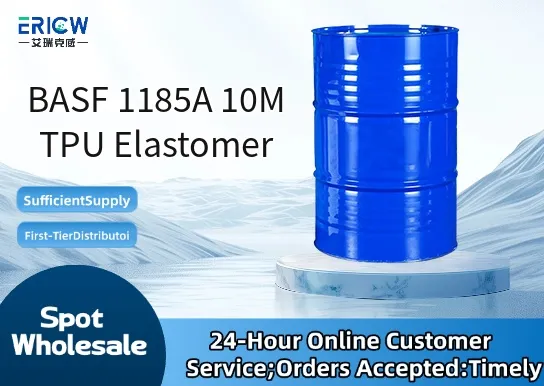
Excellent melt processability for high-speed extrusion and injection molding.
Outstanding abrasion resistance and mechanical toughness at ambient temperatures.
Good low-temperature flexibility down to –30 °C.
Hydrolysis-stabilized formulation for enhanced long-term performance in humid environments.
Consistent batch-to-batch quality with tight molecular weight distribution.
Automotive interior trim components including instrument panel skins and door panels.
High-performance industrial hoses and pneumatic tubing.
Flexible cable jacketing for data and power transmission applications.
Footwear midsoles and outsoles requiring dynamic rebound and wear resistance.
Medical device tubing and non-implantable fluid handling components.
| Chemical Type | Aliphatic polyester-based thermoplastic polyurethane (TPU) |
| Product Form | Pellets |
| Appearance | Off-white, free-flowing granules |
| Shore A Hardness (ASTM D2240) | 85 ± 2 |
| Melt Flow Index (230 °C / 2.16 kg, ASTM D1238) | 10 ± 2 g/10 min |
| Density (ASTM D792) | 1.18–1.20 g/cm³ |
| Primary Applications | Extrusion, injection molding, blow molding |
| Key Features | Hydrolysis resistance, UV stability, low-temperature flexibility |
Q1: What is the primary processing method for BASF 1185A 10M?
A: BASF 1185A 10M is a melt-processable thermoplastic polyurethane elastomer designed for extrusion and injection molding. It exhibits good melt stability and flow characteristics under standard TPU processing conditions.
Q2: How does BASF 1185A 10M differ from other TPU grades in terms of hardness and elasticity?
A: BASF 1185A 10M is formulated to deliver medium Shore A hardness with balanced tensile strength and elongation at break, making it particularly suitable for flexible yet durable components requiring consistent elastic recovery and resistance to permanent deformation.
Q3: Is BASF 1185A 10M suitable for applications requiring hydrolysis resistance?
A: Yes — as an aliphatic polyester-based TPU, BASF 1185A 10M offers improved resistance to hydrolytic degradation compared to many aromatic or polyether TPUs, especially under warm, humid conditions and prolonged exposure.
Q4: Can BASF 1185A 10M be overmolded onto common engineering thermoplastics?
A: It demonstrates good adhesion to several substrates including polypropylene, ABS, and polycarbonate when processed under optimized temperature and surface preparation conditions; compatibility testing is recommended for critical bonding applications.
Contact With Us:
E-mail: wangxingqiang@ericwchem.com
Have a Questions? Call Us:
Add:
Building A1, Jiete Industrial Park, Huangpu District, Guangzhou City, Guangdong Province, China