English
 Español
 tiếng việt
 русский
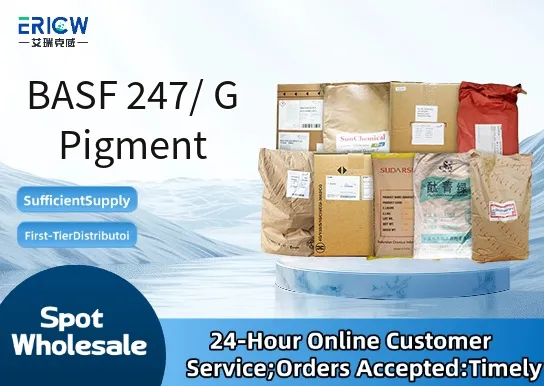
High chromatic strength with excellent color purity in greenish-yellow shade.
Outstanding thermal stability up to 280 °C, suitable for high-temperature polymer processing.
Good lightfastness and weather resistance in outdoor applications.
Low migration tendency in PVC, polyolefins, and engineering thermoplastics.
Free-flowing powder form ensures consistent dispersion and handling safety.
Coloration of rigid and flexible PVC profiles, cables, and flooring.
Pigmentation of polypropylene (PP) and polyethylene (PE) injection-molded parts.
Automotive interior plastics requiring low VOC and high heat resistance.
Masterbatch production for packaging films and non-food contact applications.
Industrial coatings and coil coatings where balanced durability and hue consistency are critical.
| Chemical Type | Organic Pigment (Azo Condensation Type) |
| Product Form | Free-flowing, dust-reduced powder |
| Appearance | Greenish-yellow powder |
| Primary Applications | PVC, PP, PE, ABS, PS, and coatings |
| Key Features | Thermal stability, low migration, good dispersibility |
| Benefits | Consistent batch-to-batch color, reduced filtration pressure, improved processing efficiency |
| Recommended Processing Temperature Range | 160–280 °C |
| Regulatory Compliance | REACH compliant; not listed under Annex XIV or XVII |
Q1: What is the primary chemical nature of BASF 247/G Pigment?
A: BASF 247/G is an organic pigment based on the quinacridone class, known for its high chromatic strength, excellent lightfastness, and thermal stability. It is not a dye or a metal complex pigment, and it exhibits inherent resistance to migration in polymeric matrices.
Q2: In which polymer systems is BASF 247/G most commonly used?
A: This pigment is widely employed in engineering thermoplastics such as polyamide (PA), polybutylene terephthalate (PBT), and polyethylene terephthalate (PET), especially where high-temperature processing and long-term color stability are required. It is also suitable for use in certain high-performance polyolefin compounds under controlled dispersion conditions.
Q3: How should BASF 247/G be dispersed for optimal performance?
A: Effective dispersion typically requires high-shear compounding—such as twin-screw extrusion—at temperatures appropriate for the host polymer. Pre-dispersed masterbatches are recommended for consistent color development and to minimize dust handling. Avoid prolonged residence times at peak melt temperatures to preserve pigment integrity.
Q4: Is BASF 247/G suitable for food-contact applications?
A: While BASF 247/G is manufactured under strict quality control and complies with general purity requirements for pigments used in plastics, its suitability for food-contact applications depends on final regulatory evaluation within the target market and specific formulation parameters—including polymer type, processing conditions, and intended use. Users must conduct their own compliance assessment per applicable local regulations.
Q5: What are typical dosage levels when using BASF 247/G in thermoplastics?
A: Dosage generally ranges from 0.1% to 2% by weight, depending on the desired shade intensity, polymer transparency, and processing method. Lower concentrations are often sufficient due to its high tinctorial strength, particularly in opaque or semi-crystalline systems.
Contact With Us:
E-mail: wangxingqiang@ericwchem.com
Have a Questions? Call Us:
Add:
Building A1, Jiete Industrial Park, Huangpu District, Guangzhou City, Guangdong Province, China