English
 Español
 tiếng việt
 русский
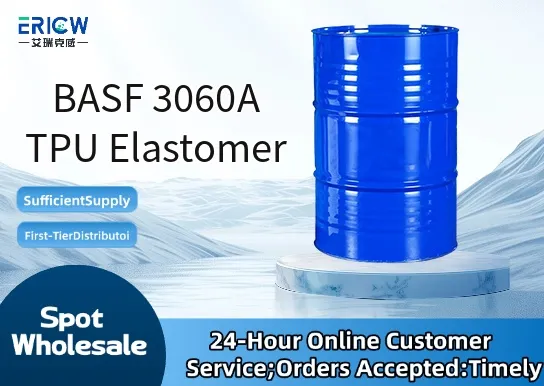
Excellent abrasion resistance for demanding mechanical service life requirements.
Outstanding low-temperature flexibility down to –40 °C without embrittlement.
Good processability via injection molding and extrusion with narrow melt viscosity window.
Hydrolysis-resistant formulation suitable for humid and warm environments.
High tensile strength and elongation at break for dynamic, load-bearing applications.
Automotive interior trim components including gear knobs and soft-touch overlays.
Industrial hoses and pneumatic tubing requiring oil and ozone resistance.
Consumer electronics protective casings and flexible cable jackets.
Footwear midsoles and outsole compounds for athletic and work footwear.
Medical device tubing and non-implantable fluid-handling components.
| Chemical Type | Thermoplastic Polyurethane (Aliphatic Polyester-based) |
| Product Form | Pellets |
| Appearance | Off-white to light yellow, free-flowing granules |
| Hardness (Shore A) | 60 ± 3 |
| Density (g/cm³) | 1.18–1.20 |
| Melt Flow Index (230 °C/2.16 kg, g/10 min) | 15–22 |
| Tensile Strength (MPa) | 32–38 |
| Elongation at Break (%) | 550–620 |
Q1: What is the primary processing method for BASF 3060A TPU Elastomer?
A: BASF 3060A is a thermoplastic polyurethane elastomer designed for melt-processing techniques, including injection molding, extrusion, and blow molding. Its balanced melt viscosity and thermal stability support consistent processing across standard TPU equipment.
Q2: Is BASF 3060A suitable for applications requiring flexibility and abrasion resistance?
A: Yes — BASF 3060A delivers excellent elasticity, high tensile strength, and superior resistance to abrasion, tearing, and repeated flexing. It is commonly selected for dynamic components such as seals, gaskets, protective casings, and wearable device parts where mechanical durability under cyclic stress is critical.
Q3: How does BASF 3060A perform in environments with exposure to oils and greases?
A: As an aliphatic polyester-based TPU, BASF 3060A offers good resistance to non-polar hydrocarbons, lubricating oils, and many common greases — significantly better than many polyether TPUs. Performance may vary depending on temperature, concentration, and duration of exposure; compatibility testing under end-use conditions is recommended.
Q4: Can BASF 3060A be overmolded onto other thermoplastics?
A: Yes — BASF 3060A exhibits strong adhesion to various engineering thermoplastics such as ABS, PC, and certain polyamides when processed via two-shot or multi-material injection molding. Optimal bonding depends on substrate surface energy, mold temperature, and interfacial melt conditions; process validation is advised for each specific combination.
Q5: Does BASF 3060A require drying before processing?
A: Yes — like most hygroscopic TPUs, BASF 3060A must be thoroughly dried prior to melt processing to prevent hydrolytic degradation, surface defects, and reduced mechanical performance. A standard recommendation is drying at 80–90 °C for 2–4 hours using desiccant-assisted equipment, though actual conditions should be optimized based on ambient humidity and material history.
Contact With Us:
E-mail: wangxingqiang@ericwchem.com
Have a Questions? Call Us:
Add:
Building A1, Jiete Industrial Park, Huangpu District, Guangzhou City, Guangdong Province, China