English
 Español
 tiếng việt
 русский
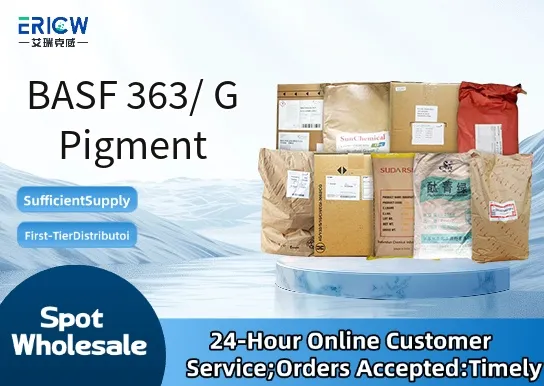
High chromatic strength with excellent color purity in greenish-yellow shade.
Outstanding thermal stability up to 280 °C, suitable for high-temperature polymer processing.
Good lightfastness and weather resistance in outdoor applications.
Excellent dispersibility in both polar and non-polar media including PVC, PS, and ABS.
Low migration tendency, meeting stringent regulatory requirements for food-contact plastics (EU 10/2011 compliant).
Coloration of rigid and flexible PVC profiles, pipes, and flooring.
Pigmentation of polystyrene (PS) housings and decorative injection-molded parts.
Masterbatch formulation for polyolefins (PP, PE) used in automotive interior trim.
Specialty coatings for industrial appliances and durable consumer goods.
Plastic packaging films requiring FDA-compliant colorants for dry food contact.
| Chemical Type | Azo pigment (Benzimidazolone derivative) |
| Product Form | Fine powder, free-flowing |
| Appearance | Greenish-yellow crystalline powder |
| Primary Applications | PVC, PS, ABS, PP, PE, coatings |
| Key Features | Thermal stability, low migration, high tinctorial strength |
| Benefits | Consistent batch-to-batch color, easy dispersion, regulatory compliance |
| Regulatory Status | EU REACH registered; compliant with EU 10/2011 and FDA 21 CFR 178.3297 |
| pH Value (5% aqueous suspension) | 6.5 – 7.5 |
Q1: What is the primary chemical nature of BASF 363/G Pigment?
A: BASF 363/G is an organic pigment based on a high-performance quinacridone derivative, offering excellent lightfastness, weather resistance, and thermal stability suitable for demanding polymer processing conditions.
Q2: Is BASF 363/G suitable for food-contact plastics?
A: While not pre-approved for all food-contact applications, BASF 363/G is designed to meet general requirements for pigments used in food-contact polymers when formulated and processed in accordance with applicable regulatory frameworks; final compliance depends on the complete formulation and end-use conditions.
Q3: Which polymer systems show optimal dispersion and color development with BASF 363/G?
A: BASF 363/G demonstrates excellent compatibility and dispersion in polyolefins (e.g., PP, HDPE), engineering thermoplastics (e.g., PA, PBT), and PVC, particularly when used with standard dispersing aids or masterbatch carriers tailored for high-shear processing.
Q4: How does BASF 363/G perform under high-temperature processing conditions?
A: This pigment exhibits good thermal stability up to typical melt processing temperatures for polyolefins and engineering plastics, maintaining color strength and hue integrity without significant degradation or blooming during standard extrusion or injection molding cycles.
Q5: What is the recommended dosage range for achieving full opacity and chromatic intensity?
A: Dosage typically ranges from 0.1% to 2% by weight depending on the base polymer, desired shade depth, and required opacity; lower concentrations are often sufficient for transparent or translucent effects, while higher loadings support deep, saturated tones in opaque applications.
Contact With Us:
E-mail: wangxingqiang@ericwchem.com
Have a Questions? Call Us:
Add:
Building A1, Jiete Industrial Park, Huangpu District, Guangzhou City, Guangdong Province, China