English
 Español
 tiếng việt
 русский
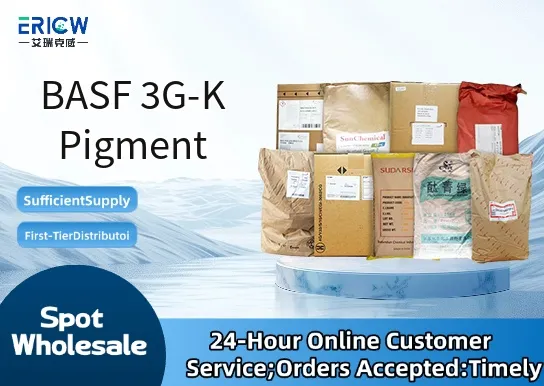
High chroma and excellent color strength in yellow-green shade.
Outstanding thermal stability suitable for high-temperature processing up to 280 °C.
Good lightfastness and weather resistance under standard outdoor exposure conditions.
Excellent dispersibility in both polar and non-polar polymer matrices.
Low migration behavior, ensuring color consistency in demanding applications.
Polyolefin (PP, PE) injection molding and blow molding.
Engineering plastics including ABS, PS, and PC blends.
Automotive interior components requiring long-term color retention.
Consumer goods packaging films and rigid containers.
Industrial coatings for durable equipment and machinery housings.
| Chemical Type | Organic Pigment (Disazo) |
| Product Form | Free-flowing powder |
| Appearance | Greenish-yellow crystalline powder |
| Primary Applications | Plastics, coatings, masterbatches |
| Key Features | Thermally stable, low volatility, non-bleeding |
| Benefits | Consistent batch-to-batch color, easy dispersion, RoHS-compliant |
| Regulatory Status | REACH registered; compliant with EU Directive 2002/61/EC |
Q1: What is the primary chemical nature and classification of BASF 3G-K Pigment?
A: BASF 3G-K Pigment is an organic pigment based on a high-performance azo condensation structure, engineered for excellent lightfastness, thermal stability, and dispersion characteristics in polymer matrices.
Q2: In which polymer systems is BASF 3G-K Pigment most commonly processed?
A: It demonstrates strong compatibility and stability in polyolefins (e.g., PP and PE), engineering thermoplastics such as ABS and PS, and certain PVC formulations—particularly where heat resistance up to 280 °C is required during processing.
Q3: How should BASF 3G-K Pigment be dispersed for optimal color development and performance?
A: For best results, it is recommended to use high-shear compounding or masterbatch preparation with suitable carrier resins. Pre-wetting and controlled temperature profiles during melt processing help achieve uniform dispersion and minimize agglomeration.
Q4: Is BASF 3G-K Pigment suitable for applications requiring regulatory compliance in food-contact plastics?
A: While not pre-approved for all food-contact regulations globally, BASF 3G-K Pigment is manufactured under strict quality control and may be evaluated for specific food-contact uses depending on regional requirements, formulation composition, and intended migration conditions. Customers are advised to conduct application-specific compliance testing.
Q5: What is the typical dosage range for BASF 3G-K Pigment in polymer coloring applications?
A: Dosage generally ranges from 0.1% to 2% by weight, depending on the desired shade intensity, polymer type, processing method, and end-use performance requirements. It is typically used at low concentrations due to its high tinctorial strength and efficient chromophore yield.
Contact With Us:
E-mail: wangxingqiang@ericwchem.com
Have a Questions? Call Us:
Add:
Building A1, Jiete Industrial Park, Huangpu District, Guangzhou City, Guangdong Province, China