English
 Español
 tiếng việt
 русский
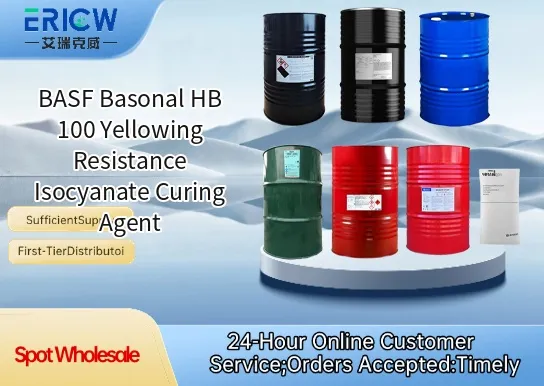
Exceptional yellowing resistance under UV exposure and thermal aging, ideal for high-clarity and light-colored coatings.
Low-viscosity aliphatic isocyanate curing agent enabling excellent flow, leveling, and compatibility with common polyols.
Hydrolytically stable structure minimizes CO₂ formation and bubble defects during ambient or forced-dry curing.
Non-volatile, low-monomer-content formulation supporting VOC-compliant coating systems.
Consistent reactivity profile ensures reliable pot life control and full crosslink density development.
High-gloss automotive clearcoats requiring long-term color stability and weather resistance.
Premium architectural coatings for façades, windows, and aluminum composite panels (ACP).
Industrial wood finishes where clarity, hardness, and non-yellowing performance are critical.
Plastic coatings for outdoor signage, lighting housings, and consumer electronics enclosures.
UV-stable coil coatings for pre-finished metal used in building and appliance applications.
| Chemical Type | Aliphatic polyisocyanate (hexamethylene diisocyanate-based trimer) |
| Product Form | Liquid |
| Appearance | Colorless to pale yellow transparent liquid |
| NCO Content (wt %) | 15.8 – 16.2% |
| Viscosity (25 °C, mPa·s) | 800 – 1,200 |
| Density (20 °C, g/cm³) | 1.19 – 1.21 |
| Flash Point (PMCC, °C) | 135 – 145 |
| Primary Applications | Two-component polyurethane topcoats demanding superior lightfastness |
Q1: What is the primary functional benefit of BASF Basonal HB 100 compared to conventional aliphatic isocyanate curing agents?
A: Basonal HB 100 is specifically engineered to deliver superior resistance to yellowing under UV exposure and thermal aging, making it especially suitable for high-clarity, light-colored, or white coatings where long-term color stability is critical.
Q2: Which types of resin systems is Basonal HB 100 typically compatible with?
A: It is designed for use with hydroxyl-functional acrylics, polyesters, and other standard OH-bearing resins in two-component polyurethane systems. Compatibility should always be verified through small-scale formulation trials under intended processing conditions.
Q3: How does Basonal HB 100 influence pot life and film formation in ambient- or forced-dry applications?
A: As a low-viscosity, sterically hindered aliphatic isocyanate, it offers extended pot life relative to conventional HDI-based curing agents while still enabling efficient crosslinking at ambient or moderately elevated temperatures. Film development and hardness build are balanced to support both spray application and curing flexibility.
Q4: Is special handling or storage required for Basonal HB 100?
A: Yes — like all isocyanates, it must be protected from moisture during storage and handling. Keep containers tightly sealed and store in a cool, dry place away from humidity and direct sunlight. Use appropriate personal protective equipment (PPE) when dispensing or formulating.
Contact With Us:
E-mail: wangxingqiang@ericwchem.com
Have a Questions? Call Us:
Add:
Building A1, Jiete Industrial Park, Huangpu District, Guangzhou City, Guangdong Province, China