English
 Español
 tiếng việt
 русский
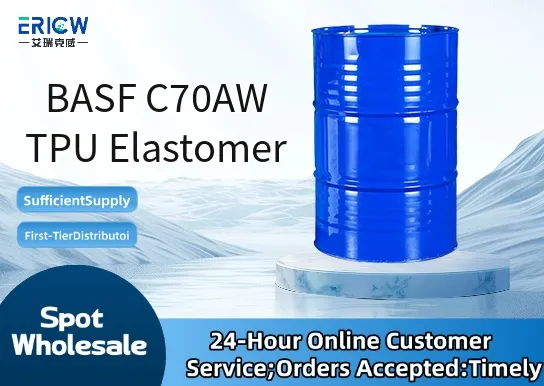
Excellent abrasion resistance for extended service life in demanding mechanical environments.
Outstanding flexibility and low-temperature toughness down to –40 °C.
Good resistance to oils, greases, and non-polar solvents.
High melt processability suitable for extrusion, injection molding, and calendering.
Hydrolysis-stabilized formulation for enhanced durability in humid or wet conditions.
Automotive interior trims and soft-touch surfaces.
Industrial hoses and fluid-conveying tubing.
Flexible cable jacketing and wire insulation.
Footwear components including midsoles and outsoles.
Consumer goods requiring durable, tactile, and recyclable thermoplastic elastomer solutions.
| Chemical Type | Aliphatic polyester-based thermoplastic polyurethane (TPU) |
| Product Form | Pellets |
| Appearance | Off-white to light beige granules |
| Density (ISO 1183) | 1.18–1.20 g/cm³ |
| Hardness (Shore A, ISO 868) | 70 ± 3 |
| Melt Flow Index (ISO 1133, 210 °C/5 kg) | 12–16 g/10 min |
| Processing Temperature Range | 180–220 °C |
| Key Features | Abrasion resistance, low-temperature flexibility, hydrolysis stability, melt processability |
Q1: What is the primary functional role of BASF C70AW in TPU formulations?
A: BASF C70AW is a polymeric processing aid designed to improve melt flow and reduce extrusion torque during TPU compounding and melt processing, particularly for demanding applications such as thin-walled profiles and fine-gauge films.
Q2: Is BASF C70AW compatible with all common TPU chemistries (e.g., polyester- and polyether-based TPUs)?
A: Yes, C70AW demonstrates broad compatibility across standard aromatic and aliphatic polyester- and polyether-based TPUs. Compatibility should still be verified under actual processing conditions due to formulation-specific interactions.
Q3: How does C70AW affect the final mechanical properties of processed TPU parts?
A: When used at recommended dosage levels, C70AW typically maintains key mechanical performance—such as tensile strength, elongation at break, and hardness—while enhancing processability. Significant property shifts may occur only at excessive loadings or if thermal history is severely altered.
Q4: Can C70AW be used in applications requiring food contact or skin-contact compliance?
A: C70AW is not intended for direct food-contact or medical-device applications. Its suitability for skin-contact products (e.g., wearable devices or soft-touch surfaces) depends on full regulatory assessment of the final compounded material, including migration behavior and toxicological evaluation.
Contact With Us:
E-mail: wangxingqiang@ericwchem.com
Have a Questions? Call Us:
Add:
Building A1, Jiete Industrial Park, Huangpu District, Guangzhou City, Guangdong Province, China