English
 Español
 tiếng việt
 русский
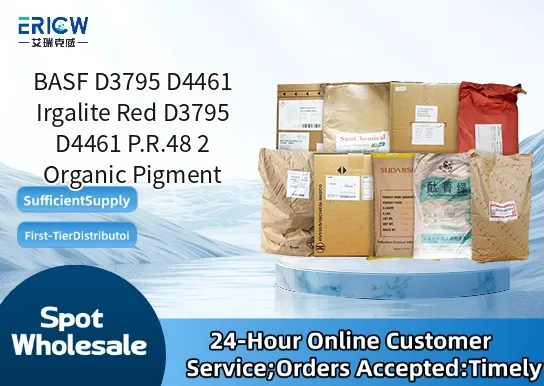
High tinctorial strength with excellent color development in both solvent-based and water-based systems.
Outstanding thermal stability up to 200 °C, suitable for demanding processing conditions including extrusion and baking.
Good lightfastness (Grade 7–8 per ISO 105-B02) and weather resistance in automotive and industrial coatings.
Low volatility and negligible migration, ensuring long-term color consistency in plastic and ink applications.
Optimized particle size distribution for enhanced dispersion stability and gloss retention in high-performance formulations.
Automotive basecoat and clearcoat systems requiring high chroma and durability.
Industrial coil and can coatings where heat resistance and color fidelity are critical.
Polyolefin and PVC compounds for exterior profiles, films, and injection-molded parts.
Gravure and flexographic inks for packaging films and labels demanding FDA-compliant performance.
High-solids and low-VOC architectural and protective coatings.
| Chemical Type | Azo pigment (Disazo, Pyrazolone type) |
| Product Form | Free-flowing powder |
| Appearance | Reddish-brown free-flowing powder |
| Primary Applications | Coatings, plastics, inks |
| Key Features | High transparency, good dispersibility, excellent heat stability |
| Color Index Name | Pigment Red 48:2 |
| Color Index Number | C.I. 15865:2 |
| Regulatory Compliance | REACH registered; compliant with EU Directive 2002/72/EC for food-contact plastics (subject to specific migration limits) |
Q1: What is the primary chemical classification and pigment type of Irgalite Red D3795 D4461?
A: Irgalite Red D3795 D4461 is a high-performance, azo-based organic pigment classified under Pigment Red 48:2 (PR48:2), offering strong tinting strength, good dispersibility, and balanced thermal stability for demanding industrial applications.
Q2: Is this pigment suitable for use in polyolefin plastics such as PP and PE?
A: Yes — D3795 D4461 is specifically engineered for excellent compatibility and dispersion in polyolefin systems, including injection-molded and extruded PP and PE, with good resistance to thermal degradation during processing.
Q3: How does its weathering and lightfastness performance compare to other PR48:2 pigments?
A: This grade delivers enhanced lightfastness and improved resistance to atmospheric exposure compared to standard PR48:2 variants, particularly when used in outdoor-oriented plastic applications — though long-term durability remains formulation- and substrate-dependent.
Q4: What are typical dosage ranges when using this pigment in plastic masterbatches?
A: Dosage typically ranges from 0.1% to 2% by weight in final plastic products, depending on desired shade depth, opacity requirements, and base resin characteristics — precise levels should be determined through lab-scale trials and process validation.
Contact With Us:
E-mail: wangxingqiang@ericwchem.com
Have a Questions? Call Us:
Add:
Building A1, Jiete Industrial Park, Huangpu District, Guangzhou City, Guangdong Province, China