English
 Español
 tiếng việt
 русский
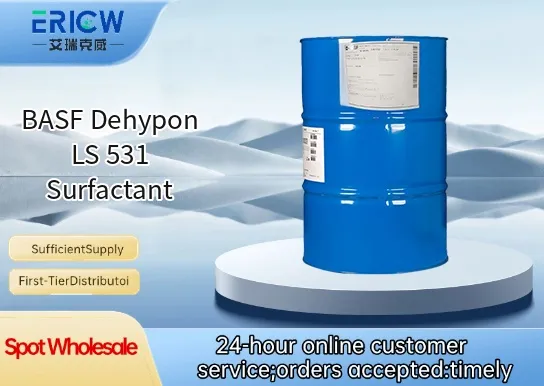
Nonionic surfactant based on linear alcohol ethoxylate with optimized ethoxylation pattern for balanced hydrophilicity and lipophilicity.
Excellent wetting, emulsifying, and solubilizing performance in hard water and across broad pH ranges (pH 4–12).
Low foaming profile suitable for high-shear and industrial cleaning applications where foam control is critical.
Good compatibility with anionic, cationic, and amphoteric surfactants, enabling versatile formulation flexibility.
Eco-preferred profile: readily biodegradable (OECD 301E compliant) and free of alkylphenol ethoxylates (APEO-free).
Industrial and institutional (I&I) hard-surface cleaners, including floor, glass, and stainless-steel cleaners.
Automotive care formulations such as pre-wash solutions, wheel cleaners, and engine degreasers.
Agrochemical adjuvants for enhancing pesticide and herbicide spray dispersion and leaf coverage.
Textile processing auxiliaries, particularly in scouring and dyeing baths requiring low-foam wetting agents.
Metalworking fluid additives for improved emulsion stability and boundary lubricity in semi-synthetic coolants.
| Chemical Type | Linear alcohol ethoxylate (C12–C15, avg. EO ≈ 7) |
| Product Form | Liquid |
| Appearance | Pale yellow to colorless, clear liquid |
| pH (1% aqueous solution, 20 °C) | 5.5–7.0 |
| Active Content (wt. %) | 99.0–100.0 |
| Density (20 °C) | 1.02–1.04 g/cm³ |
| Cloud Point (1% aqueous solution) | 62–68 °C |
| Primary Applications | Wetting agent, emulsifier, solubilizer in industrial cleaning and functional fluids |
Q1: What is the primary chemical nature of Dehypon LS 531?
A: Dehypon LS 531 is a nonionic surfactant based on alkyl polyglucoside (APG) chemistry, derived from renewable raw materials such as fatty alcohols and glucose. It exhibits excellent biodegradability, low toxicity, and mildness to skin and eyes.
Q2: In which types of industrial cleaning formulations is Dehypon LS 531 most commonly used?
A: It is widely applied in low-foaming, high-rinsing industrial and institutional cleaners — especially for hard-surface cleaning, metal parts cleaning, and CIP (clean-in-place) systems — where environmental profile, compatibility with electrolytes, and stability across pH ranges are critical.
Q3: How does Dehypon LS 531 perform in hard water and at elevated temperatures?
A: Dehypon LS 531 demonstrates good tolerance to water hardness and maintains effective wetting and emulsifying performance at elevated temperatures, making it suitable for demanding cleaning processes without requiring additional chelating agents in many cases.
Q4: Is Dehypon LS 531 compatible with anionic and cationic surfactants?
A: It shows broad compatibility with anionic surfactants (e.g., LAS, AES) and certain amphoteric systems, supporting synergistic cleaning effects. However, direct blending with strongly cationic species should be evaluated case-by-case due to potential interaction risks.
Q5: What is the typical dosage range for Dehypon LS 531 in formulated cleaners?
A: Dosage depends on formulation requirements and application intensity, but it is typically used at low concentrations — generally ranging from 0.1% to 2% by weight — to deliver effective detergency while maintaining favorable ecological and processing properties.
Contact With Us:
E-mail: wangxingqiang@ericwchem.com
Have a Questions? Call Us:
Add:
Building A1, Jiete Industrial Park, Huangpu District, Guangzhou City, Guangdong Province, China