English
 Español
 tiếng việt
 русский
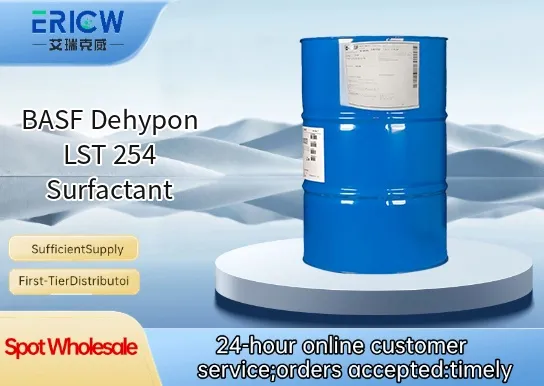
Nonionic surfactant based on linear alcohol ethoxylate chemistry with optimized hydrophilic-lipophilic balance (HLB).
Excellent wetting, emulsifying, and solubilizing performance in aqueous systems across broad pH and temperature ranges.
Low foaming profile suitable for high-shear and industrial cleaning applications where foam control is critical.
Good compatibility with anionic, cationic, and other nonionic surfactants, enabling versatile formulation flexibility.
EcoVadis-recognized sustainable profile with readily biodegradable components and low aquatic toxicity.
Industrial and institutional cleaners (I&I), including hard surface cleaners and floor maintenance formulations.
Agrochemical adjuvants for enhancing pesticide and herbicide dispersion, penetration, and rainfastness.
Textile auxiliaries such as scouring agents, dye dispersants, and leveling agents in pretreatment processes.
Paint and coating additives for pigment wetting, stabilization, and rheology modification in waterborne systems.
Oilfield chemicals, particularly in wellbore clean-up fluids and emulsion breakers for crude oil processing.
| Chemical Type | Linear alcohol ethoxylate (C12–C15, ~7 EO units) |
| Product Form | Pale yellow to amber viscous liquid |
| Appearance | Clear to slightly hazy, homogeneous liquid at 25 °C |
| pH (1% aqueous solution, 20 °C) | 5.5 – 7.0 |
| Active Content (wt %) | 98 – 100% |
| Density (20 °C, g/cm³) | 1.02 – 1.05 |
| Solubility in Water | Complete miscibility at room temperature |
| Primary Applications | Wetting agent, emulsifier, solubilizer, and co-surfactant in industrial formulations |
Q1: What is the primary chemical nature of Dehypon LST 254?
A: Dehypon LST 254 is a nonionic surfactant based on alkyl polyglucoside (APG) chemistry, offering excellent biodegradability and mildness while maintaining robust surface-active performance in aqueous systems.
Q2: In which types of industrial cleaning formulations is Dehypon LST 254 most commonly used?
A: It is widely applied in low-foaming, high-rinsing industrial cleaners—especially for metal parts cleaning, CIP (clean-in-place) solutions, and precision cleaning where residue control and compatibility with chelants or builders are critical.
Q3: How does Dehypon LST 254 perform in hard water and at elevated temperatures?
A: Thanks to its APG backbone, it exhibits good tolerance to calcium and magnesium ions and maintains effective wetting and solubilization across a broad temperature range, including typical hot cleaning conditions up to 80 °C.
Q4: Is Dehypon LST 254 compatible with common anionic and nonionic co-surfactants?
A: Yes—it shows broad formulation compatibility, particularly with common anionic surfactants like LAS or AES, as well as other nonionics such as alcohol ethoxylates, enabling synergistic cleaning performance without significant phase separation or viscosity instability.
Q5: What is the typical dosage range for Dehypon LST 254 in formulated cleaners?
A: Dosage depends on formulation requirements and desired performance, but it is typically used at low concentrations—generally ranging from 0.1% to 2% by weight—in ready-to-use or concentrate systems.
Contact With Us:
E-mail: wangxingqiang@ericwchem.com
Have a Questions? Call Us:
Add:
Building A1, Jiete Industrial Park, Huangpu District, Guangzhou City, Guangdong Province, China