English
 Español
 tiếng việt
 русский
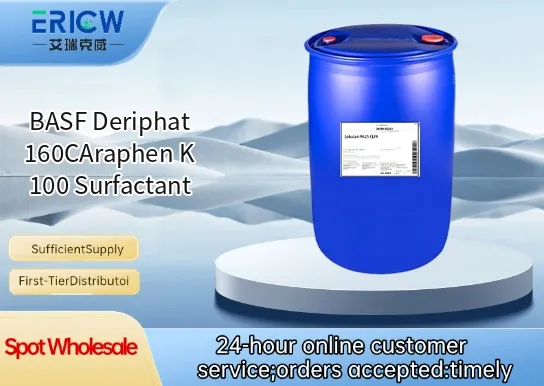
Highly effective anionic surfactant based on alkylphenol ethoxylate sulfate chemistry with optimized hydrophile-lipophile balance (HLB).
Excellent wetting, emulsifying, and detergency performance in hard water and across broad pH ranges (pH 4–12).
Good foaming characteristics with stable, fine-textured foam suitable for rinse-off formulations.
Compatible with common cationic, nonionic, and amphoteric surfactants—enabling versatile formulation flexibility.
Supplied as a free-flowing, low-dust granular solid for safe handling and precise dosing in industrial processes.
Industrial and institutional (I&I) cleaning agents, including floor cleaners, degreasers, and sanitizing concentrates.
Agrochemical formulations such as EC (emulsifiable concentrate), SC (suspension concentrate), and SE (soluble emulsion) adjuvants.
Textile auxiliaries for scouring, dye leveling, and wetting of synthetic and blended fibers.
Leather processing aids for unhairing, deliming, and fatliquor emulsification.
Oilfield chemicals including drilling fluid additives and pipeline cleaning formulations.
| Chemical Type | Alkylphenol ethoxylate sulfate (branched C9-C11 APEO-based) |
| Product Form | Free-flowing granules |
| Appearance | White to off-white granular solid |
| pH (1% aqueous solution) | 6.5 – 8.5 |
| Active Matter Content | ≥ 90.0 wt-% |
| Sodium Sulfate Content | ≤ 5.0 wt-% |
| Moisture Content | ≤ 1.5 wt-% |
| Primary Applications | Wetting agent, emulsifier, and detergent booster in technical and industrial formulations |
Q1: What is the primary chemical nature of Deriphat 160CAraphen K 100?
A: Deriphat 160CAraphen K 100 is a sodium salt of alkylphenol ethoxylate sulfonate, offering a balanced combination of anionic character and enhanced wetting/stabilizing performance in demanding industrial formulations.
Q2: In which types of industrial cleaning systems is this surfactant commonly applied?
A: It is widely used in high-performance alkaline and neutral-pH industrial cleaners—especially for metal pretreatment, electrocleaning baths, and heavy-duty degreasing applications where persistent foam control and substrate compatibility are critical.
Q3: How does Deriphat 160CAraphen K 100 perform in hard water conditions?
A: Thanks to its sulfonated structure and optimized ethoxylation profile, it maintains good solubility and detergency in moderately hard water, though performance may vary depending on total hardness and co-formulants present.
Q4: Is this surfactant suitable for use in rinse-aid or low-foaming rinse formulations?
A: Yes—it delivers effective surface tension reduction while exhibiting inherently lower foaming tendencies compared to conventional linear alkylbenzene sulfonates (LAS), making it well-suited for rinse-phase applications where rapid drainage and minimal residue are required.
Q5: What guidance can be offered for dosage in typical formulations?
A: Dosage is formulation-dependent, but it is typically used at low concentrations—generally ranging from 0.1% to 2% by weight—in industrial cleaner concentrates, with optimal levels determined through application-specific testing under representative process conditions.
Contact With Us:
E-mail: wangxingqiang@ericwchem.com
Have a Questions? Call Us:
Add:
Building A1, Jiete Industrial Park, Huangpu District, Guangzhou City, Guangdong Province, China