English
 Español
 tiếng việt
 русский
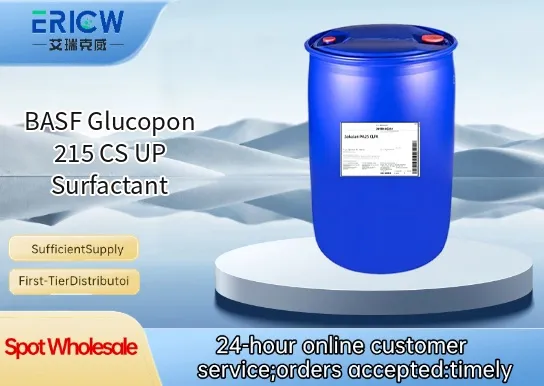
Non-ionic, alkyl polyglucoside-based surfactant derived from renewable raw materials (vegetable oils and glucose).
Excellent foaming performance with rich, stable, and creamy foam even in hard water.
Mild to skin and eyes — ideal for sensitive-skin formulations and certified for use in Ecocert and COSMOS-standard cosmetics.
High biodegradability (>90% in OECD 301B test) and low aquatic toxicity, supporting sustainable product design.
Good compatibility with anionic, cationic, amphoteric, and non-ionic surfactants, enabling versatile formulation flexibility.
Personal care cleansing products: liquid hand soaps, facial cleansers, and baby shampoos.
Home care formulations: eco-friendly dishwashing liquids and all-purpose cleaners.
Industrial & institutional (I&I) cleaning agents requiring high-performance, low-irritancy surfactants.
Specialty agrochemical adjuvants for improved spray droplet spreading and leaf wetting.
Pharmaceutical topical preparations where mildness and purity are critical.
| Chemical Type | Alkyl Polyglucoside (C8–C10) |
| Product Form | Pale yellow to amber viscous liquid |
| Appearance (at 20 °C) | Clear to slightly opalescent, homogeneous liquid |
| Active Content (wt. %) | ≈ 50–52% |
| pH (10% aqueous solution) | 6.5–8.0 |
| Solubility | Freely soluble in water; miscible with common polar solvents |
| Primary Applications | Cleansing, foaming, emulsifying, and solubilizing agent |
| Key Features | Mild, biodegradable, plant-based, low-foam-to-mid-foam profile |
Q1: What is the primary chemical nature of Glucopon 215 CS UP?
A: Glucopon 215 CS UP is a non-ionic surfactant based on alkyl polyglucoside chemistry, derived from renewable raw materials — specifically fatty alcohol (C8–C10) and glucose. It features excellent biodegradability, low skin irritation potential, and inherent compatibility with electrolytes and other polar ingredients.
Q2: How does Glucopon 215 CS UP differ from standard Glucopon 215 in terms of formulation suitability?
A: The “UP” designation indicates an upgraded purity profile — reduced residual fatty alcohol and lower color — making it especially suitable for sensitive applications such as personal care products, clear aqueous systems, or formulations requiring high optical clarity and stability over time.
Q3: Is Glucopon 215 CS UP compatible with common preservatives and active ingredients in cosmetic formulations?
A: Yes — it demonstrates broad compatibility with typical cosmetic actives (e.g., panthenol, niacinamide), chelators (e.g., EDTA), and widely used preservative systems, including parabens, phenoxyethanol blends, and isothiazolinones. Its mildness and non-ionic character minimize interference with pH-sensitive or charged ingredients.
Q4: Can Glucopon 215 CS UP be used in cold-process formulations?
A: Yes — it is fully water-soluble and readily dispersible at room temperature, enabling efficient incorporation into cold-process systems such as no-rinse cleansers, micellar waters, and ready-to-use household cleaning concentrates without heating or extended mixing.
Q5: What are typical usage levels for Glucopon 215 CS UP in liquid cleansing products?
A: It is typically used at low concentrations to deliver effective foaming and mild cleansing — generally ranging from 0.1% to 2% by weight in final formulations — with dosage depending on desired foam profile, viscosity, and synergy with co-surfactants.
Contact With Us:
E-mail: wangxingqiang@ericwchem.com
Have a Questions? Call Us:
Add:
Building A1, Jiete Industrial Park, Huangpu District, Guangzhou City, Guangdong Province, China