English
 Español
 tiếng việt
 русский
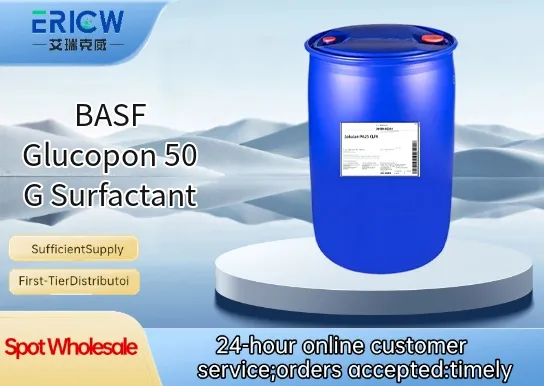
Non-ionic, plant-based surfactant derived from renewable raw materials (glucose and coconut/fatty alcohol).
Excellent foaming performance with rich, stable, and creamy foam even in hard water.
Mild to skin and eyes — ideal for sensitive-skin formulations and certified for natural cosmetic standards (e.g., COSMOS).
High compatibility with anionic, cationic, and amphoteric surfactants, enabling versatile formulation flexibility.
Biodegradable and ecotoxicologically favorable, supporting sustainable product design and regulatory compliance.
Personal care cleansing products: liquid soaps, shower gels, facial cleansers, and baby shampoos.
Natural and organic-certified cosmetics requiring high-performance mild surfactants.
Household cleaning formulations: eco-friendly dishwashing liquids and hand dish soaps.
Industrial and institutional cleaners where low irritation and biodegradability are required.
Specialty agrochemical adjuvants for improved spray droplet dispersion and foliar uptake.
| Chemical Type | Alkyl polyglucoside (APG), non-ionic surfactant |
| Product Form | Light yellow to amber viscous liquid |
| Appearance | Clear to slightly opalescent liquid at 20 °C |
| Active Content | ≈ 50 wt% (as supplied) |
| pH (10 % aqueous solution) | 6.5 – 8.5 |
| Solubility | Freely soluble in water; miscible with common polar solvents |
| Primary Applications | Cleansing, foaming, and emulsifying agent in personal care & household products |
| Key Features | Mildness, biodegradability, renewable origin, hard-water tolerance |
Q1: What is the primary chemical nature of Glucopon 50 G?
A: Glucopon 50 G is a non-ionic surfactant based on alkyl polyglucosides (APGs), derived from renewable raw materials — specifically glucose and fatty alcohols. It features a balanced hydrophilic-lipophilic structure, offering mildness, biodegradability, and compatibility with a broad range of other ingredients.
Q2: In which types of formulations is Glucopon 50 G most commonly used?
A: It is widely applied in mild personal care products such as shampoos, body washes, facial cleansers, and baby care formulations. Its excellent foaming, cleansing, and skin-compatibility properties also support use in household cleaning concentrates and eco-friendly industrial cleaners where low irritation and high environmental profile are priorities.
Q3: How does Glucopon 50 G perform in hard water and in combination with electrolytes?
A: Glucopon 50 G exhibits good stability and performance in moderately hard water and maintains effective foaming and detergency even in the presence of common electrolytes. Its non-ionic character contributes to reduced sensitivity to water hardness compared to anionic surfactants, though optimal performance is achieved when formulated within recommended pH and ionic strength ranges.
Q4: Is Glucopon 50 G compatible with preservatives, thickeners, and other active ingredients?
A: Yes — Glucopon 50 G demonstrates broad compatibility with common cosmetic preservatives (e.g., parabens, isothiazolinones), associative and non-associative thickeners (e.g., xanthan gum, acrylates copolymers), and various actives including vitamins, botanical extracts, and sunscreens. Compatibility should always be verified in the final formulation due to potential interactions under specific conditions.
Q5: What are the key handling and storage recommendations for Glucopon 50 G?
A: Store in original sealed containers at temperatures between 5 °C and 30 °C, away from direct sunlight and sources of heat or freezing. Avoid prolonged exposure to air to prevent moisture absorption. The product is supplied as a viscous liquid and may require gentle warming for ease of pumping or metering in cold ambient conditions.
Contact With Us:
E-mail: wangxingqiang@ericwchem.com
Have a Questions? Call Us:
Add:
Building A1, Jiete Industrial Park, Huangpu District, Guangzhou City, Guangdong Province, China