English
 Español
 tiếng việt
 русский
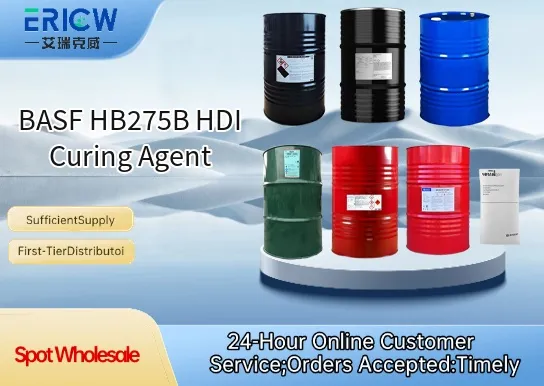
High-performance aliphatic polyisocyanate based on hexamethylene diisocyanate (HDI) trimer chemistry.
Excellent weather resistance and UV stability for long-term gloss and color retention.
Low viscosity formulation enabling easy handling, efficient mixing, and superior flow/leveling in coatings.
Compatible with a broad range of hydroxyl-functional resins including polyesters, acrylics, and polyols.
Meets stringent VOC regulations with low monomer content and high functionality efficiency.
Automotive OEM and refinish clearcoats and basecoats.
Industrial maintenance coatings for machinery, agricultural equipment, and construction vehicles.
High-end architectural coatings requiring durability and aesthetic performance.
Plastic coatings for automotive interior and exterior trim components.
Wood coatings for premium furniture and flooring applications.
| Chemical Type | Aliphatic HDI trimer-based polyisocyanate |
| Product Form | Liquid |
| Appearance | Clear, pale yellow liquid |
| NCO Content (wt %) | 19.5 – 20.5 |
| Viscosity (25 °C, mPa·s) | 1,800 – 2,400 |
| Functionality (avg.) | ~3.2 |
| Density (20 °C, g/cm³) | 1.18 – 1.22 |
| Solvent | Acetate-based (e.g., butyl acetate) |
Q1: What is the primary function of BASF HB275B in coating and adhesive formulations?
A: BASF HB275B is a low-viscosity, aliphatic HDI-based polyisocyanate curing agent designed to react with hydroxyl-functional resins—such as polyesters, acrylics, or polyethers—to form durable, weather-resistant polyurethane networks. It enables ambient- or low-bake cure profiles while delivering excellent gloss retention and mechanical performance.
Q2: How does HB275B compare to traditional HDI trimer curing agents in terms of handling and reactivity?
A: HB275B features a tailored molecular architecture that provides lower viscosity and improved compatibility with common resin systems compared to standard HDI trimers. Its optimized NCO functionality and steric profile support consistent pot life and controlled reactivity—making it especially suitable for high-solids and low-VOC formulations without requiring aggressive catalysts.
Q3: Is HB275B suitable for use in coatings requiring FDA compliance for indirect food contact?
A: HB275B is not inherently compliant with food-contact regulations; its suitability depends entirely on the final cured film composition, formulation design, and end-use conditions. Customers must conduct full regulatory evaluation—including migration testing and compliance verification—based on applicable jurisdictional requirements before claiming food-contact safety.
Q4: What are typical storage and handling recommendations for HB275B?
A: Store HB275B in tightly sealed containers under dry, cool conditions (ideally below 30 °C) and protect from moisture, heat, and direct sunlight. Due to its isocyanate functionality, avoid exposure to ambient humidity during handling and ensure equipment is thoroughly dried prior to use. Always follow BASF’s Safety Data Sheet for occupational health and safe processing guidance.
Contact With Us:
E-mail: wangxingqiang@ericwchem.com
Have a Questions? Call Us:
Add:
Building A1, Jiete Industrial Park, Huangpu District, Guangzhou City, Guangdong Province, China