English
 Español
 tiếng việt
 русский
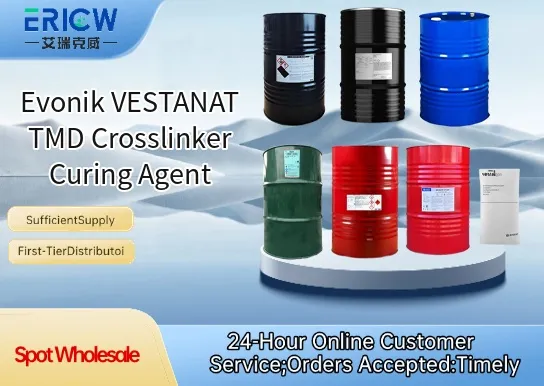
Highly reactive aliphatic polyisocyanate crosslinker with excellent hydrolytic stability.
Low viscosity enables easy handling and homogeneous mixing with hydroxyl-functional resins.
Delivers outstanding weather resistance, gloss retention, and mechanical durability in cured films.
Free of volatile organic compounds (VOC-free formulation), supporting sustainable coating systems.
Compatible with a broad range of polyester, acrylic, and polyol resins for ambient or forced-dry curing.
Automotive OEM and refinish clearcoats and basecoats.
Industrial maintenance coatings for metal substrates.
High-performance wood and plastic coatings requiring superior hardness and flexibility.
Architectural and coil coatings demanding long-term UV stability and color fidelity.
Electronics enclosures and appliance finishes requiring chemical resistance and smooth aesthetics.
| Chemical Type | Aliphatic polyisocyanate (hexamethylene diisocyanate trimer) |
| Product Form | Liquid |
| Appearance | Clear, colorless to pale yellow liquid |
| NCO Content (wt. %) | 15.5–16.5% |
| Viscosity (25 °C, mPa·s) | 800–1,200 |
| Density (20 °C, g/cm³) | 1.19–1.21 |
| Solvent Content | None (solvent-free) |
| VOC Content (g/L) | 0 |
Q1: What is the primary chemical functionality of VESTANAT TMD?
A: VESTANAT TMD is a tris(methoxyethyl)amine-modified melamine-formaldehyde crosslinker, featuring multiple reactive methoxyalkyl ether groups that enable efficient covalent bonding with hydroxyl- and carboxyl-functional resins under acidic catalysis.
Q2: Which resin systems is VESTANAT TMD typically compatible with?
A: It is widely used in combination with hydroxyl-functional acrylics, polyesters, alkyds, and epoxy resins—particularly in high-performance industrial coatings, coil coatings, and automotive topcoats where enhanced hardness, chemical resistance, and cure speed are required.
Q3: How does VESTANAT TMD compare to conventional melamine crosslinkers in terms of volatility and formaldehyde release?
A: Due to its etherified structure and absence of free formaldehyde, VESTANAT TMD exhibits significantly lower volatility and minimal formaldehyde emission during cure compared to traditional hexamethoxymethylmelamine (HMMM), supporting safer handling and more sustainable formulation profiles.
Q4: What catalysts are recommended for optimal curing performance with VESTANAT TMD?
A: Acidic catalysts such as p-toluenesulfonic acid (p-TSA), blocked sulfonic acids, or weak organic acids are commonly employed; catalyst selection and dosage should be optimized based on cure temperature, film thickness, and desired pot life.
Q5: Is VESTANAT TMD suitable for low-bake or ambient-cure applications?
A: While it is primarily designed for thermal cure processes (typically 120–180 °C), formulations with highly active catalysts and optimized resin blends may achieve partial crosslinking at lower temperatures; however, full property development generally requires elevated bake conditions.
Contact With Us:
E-mail: wangxingqiang@ericwchem.com
Have a Questions? Call Us:
Add:
Building A1, Jiete Industrial Park, Huangpu District, Guangzhou City, Guangdong Province, China