English
 Español
 tiếng việt
 русский
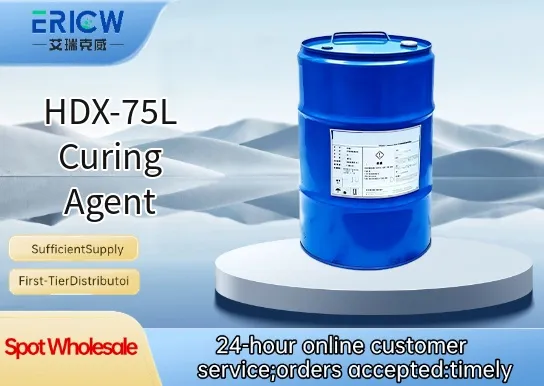
Low-viscosity liquid formulation enables easy handling and uniform mixing with epoxy resins.
Room-temperature curing capability reduces energy consumption and simplifies production workflows.
Excellent chemical resistance, particularly to alkalis, solvents, and mild acids after full cure.
Low exotherm profile minimizes internal stress and improves dimensional stability in thick-section castings.
Halogen-free composition supports compliance with RoHS and REACH regulatory requirements.
Electrical potting and encapsulation for transformers, sensors, and power modules.
High-performance adhesive systems in automotive electronics and EV battery assembly.
Protective coatings for concrete flooring in pharmaceutical and food-processing facilities.
Structural composites requiring low shrinkage and high glass transition temperature (Tg).
Repair mortars and grouts for industrial machinery and precision equipment foundations.
| Chemical Type | Aliphatic amine adduct |
| Product Form | Liquid |
| Appearance | Pale yellow, clear, homogeneous liquid |
| Density (25°C) | 0.94–0.96 g/cm³ |
| Viscosity (25°C) | 350–500 mPa·s |
| Amine Value | 280–310 mg KOH/g |
| Primary Applications | Epoxy resin curing agent for structural adhesives, potting compounds, and protective coatings |
| Key Features | Room-temperature cure, low exotherm, halogen-free, good compatibility with standard DGEBA resins |
Q1: What is the primary chemical functionality of HDX-75L Curing Agent?
A: HDX-75L is a low-viscosity, aliphatic amine-based curing agent designed for epoxy resin systems. It features reactive primary and secondary amine groups, enabling efficient crosslinking at ambient or elevated temperatures with good pot life control.
Q2: Is HDX-75L suitable for food-contact or potable water applications?
A: HDX-75L is not pre-qualified for direct food-contact or potable water applications. Formulators must conduct full regulatory evaluation—including extraction testing and compliance verification—based on final cured system performance and applicable regional requirements.
Q3: How does HDX-75L compare to conventional DETA or TETA in terms of handling and safety?
A: HDX-75L offers significantly lower volatility and reduced skin sensitization potential compared to traditional aliphatic polyamines like DETA or TETA. Its tailored molecular structure provides improved handling characteristics while maintaining effective cure kinetics.
Q4: What is the typical dosage range when using HDX-75L with standard DGEBA epoxy resins?
A: Dosage depends on formulation requirements and desired cure profile, but HDX-75L is typically used at low concentrations—generally ranging from 0.1% to 2% by weight relative to the epoxy resin—making it especially suitable for high-performance, low-additive systems.
Q5: Can HDX-75L be used in combination with other curing agents or accelerators?
A: Yes—HDX-75L is compatible with common epoxy co-catalysts and synergistic curing agents, such as tertiary amines or latent accelerators. However, compatibility and interaction effects should be verified experimentally for each specific formulation.
Contact With Us:
E-mail: wangxingqiang@ericwchem.com
Have a Questions? Call Us:
Add:
Building A1, Jiete Industrial Park, Huangpu District, Guangzhou City, Guangdong Province, China