English
 Español
 tiếng việt
 русский
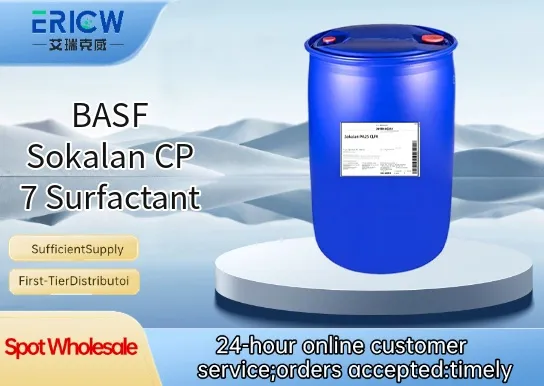
High-performance anionic polyelectrolyte based on polyacrylic acid with controlled molecular weight distribution.
Excellent dispersion and stabilization of inorganic pigments and fillers in aqueous systems.
Effective viscosity modifier that enhances rheological control without compromising flow properties.
Good compatibility with a broad range of surfactants, binders, and biocides commonly used in industrial formulations.
Low-foaming profile suitable for high-shear processing and automated coating or cleaning applications.
Architectural and industrial waterborne paints and coatings.
Industrial cleaning formulations, including CIP (clean-in-place) and alkaline detergents.
Ceramic tile adhesives and cementitious grouts.
Agrochemical suspension concentrates (SC) and water-dispersible granules (WDG).
Construction additives for concrete admixtures and self-leveling underlayments.
| Chemical Type | Anionic polyacrylic acid copolymer |
| Product Form | Aqueous solution (~30% active content) |
| Appearance | Clear to slightly opalescent, low-viscosity liquid |
| pH (1% aqueous solution) | 3.5 – 4.5 |
| Density (20 °C) | ~1.08 – 1.12 g/cm³ |
| Solubility | Completely miscible with water; limited solubility in organic solvents |
| Primary Applications | Dispersant, rheology modifier, stabilizer for aqueous pigment systems |
| Key Features | Low foaming, high electrolyte tolerance, shear-stable performance |
Q1: What is the primary function of Sokalan CP 7 in formulations?
A: Sokalan CP 7 is a polyacrylic acid-based dispersant and stabilizer designed to prevent particle agglomeration, improve pigment wetting, and enhance long-term colloidal stability—particularly in aqueous systems such as architectural coatings, industrial paints, and inkjet inks.
Q2: Is Sokalan CP 7 suitable for use in low-VOC or zero-VOC formulations?
A: Yes. As a water-soluble, non-ionic polymer with no added solvents or volatile organic carriers, Sokalan CP 7 supports the development of low-VOC and zero-VOC formulations without compromising dispersion performance or storage stability.
Q3: How does Sokalan CP 7 compare to traditional surfactants in terms of foaming behavior?
A: Unlike many low-molecular-weight surfactants, Sokalan CP 7 exhibits very low foaming tendency due to its polymeric nature and lack of micelle-forming amphiphilic structure—making it especially suitable for high-shear processes and applications where foam control is critical.
Q4: Can Sokalan CP 7 be used in combination with other rheology modifiers or associative thickeners?
A: Yes. Sokalan CP 7 is generally compatible with common cellulose ethers, hydrophobically modified ethoxylated urethanes (HEURs), and acrylic thickeners—though optimal synergy and dosage should be confirmed via formulation-specific compatibility testing under intended processing and storage conditions.
Contact With Us:
E-mail: wangxingqiang@ericwchem.com
Have a Questions? Call Us:
Add:
Building A1, Jiete Industrial Park, Huangpu District, Guangzhou City, Guangdong Province, China