English
 Español
 tiếng việt
 русский
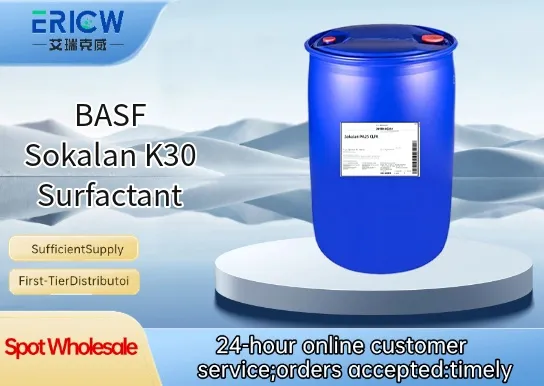
High-performance anionic polyelectrolyte based on polyacrylic acid, optimized for colloidal stabilization.
Excellent dispersion and anti-settling properties in aqueous pigment and filler systems.
pH-responsive viscosity modifier with strong electrolyte tolerance.
Low foaming profile suitable for high-shear industrial processes.
Enables improved gloss, color strength, and storage stability in formulated systems.
Waterborne architectural coatings and decorative paints.
Industrial maintenance and protective coatings.
Inkjet ink formulations requiring particle stabilization and jetting reliability.
Construction chemicals including cementitious tile adhesives and self-leveling compounds.
| Chemical Type | Polyacrylic acid-based anionic polyelectrolyte |
| Product Form | Aqueous solution (~30% active content) |
| Appearance | Clear to slightly opalescent, low-viscosity liquid |
| pH (1% aqueous solution) | 2.5 – 4.0 |
| Density (20 °C) | ~1.05 – 1.08 g/cm³ |
| Solubility | Completely miscible with water; compatible with common co-solvents |
| Primary Applications | Dispersant, rheology modifier, and stabilizer in water-based systems |
| Key Features | Colloidal stabilization, anti-sedimentation, low-foam performance |
Q1: What is the primary function of Sokalan K30 in industrial formulations?
A: Sokalan K30 is a polyacrylate-based dispersing and stabilizing surfactant designed to prevent particle agglomeration, improve pigment wetting, and enhance colloidal stability—particularly in aqueous systems such as coatings, inks, and construction chemicals.
Q2: Is Sokalan K30 suitable for use in low-VOC or waterborne formulations?
A: Yes, Sokalan K30 is compatible with low-VOC and waterborne systems due to its anionic polymeric structure and absence of volatile organic solvents or alkylphenol ethoxylates, supporting sustainable formulation goals.
Q3: How does Sokalan K30 compare to traditional small-molecule surfactants in terms of stability performance?
A: Unlike conventional low-molecular-weight surfactants, Sokalan K30 provides steric and electrostatic stabilization simultaneously, offering superior long-term dispersion stability, reduced sensitivity to electrolytes, and improved resistance to shear-induced flocculation.
Q4: What is the typical dosage range for Sokalan K30 in pigment dispersions?
A: Dosage is formulation-dependent but generally ranges from 0.1% to 2% by weight relative to pigment solids, with optimal levels determined through application-specific testing to balance stabilization efficiency and rheological behavior.
Contact With Us:
E-mail: wangxingqiang@ericwchem.com
Have a Questions? Call Us:
Add:
Building A1, Jiete Industrial Park, Huangpu District, Guangzhou City, Guangdong Province, China