English
 Español
 tiếng việt
 русский
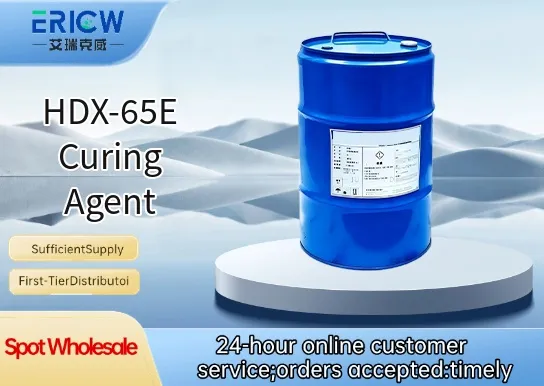
Fast-reacting aliphatic amine-based curing agent for room-temperature and elevated-temperature epoxy systems.
Excellent chemical resistance—particularly to alkalis, solvents, and mild acids after full cure.
Low viscosity (200–300 mPa·s at 25°C) ensures easy handling, precise metering, and superior wetting of fillers and substrates.
Low volatility and non-crystallizing nature provide extended pot life and consistent processing stability.
Produces tough, flexible cured films with high impact resistance and low exotherm in thick-section applications.
High-performance epoxy flooring and industrial coatings for warehouses and cleanrooms.
Structural adhesives for automotive composites and metal-to-composite bonding.
Electrical encapsulants and potting compounds requiring thermal cycling stability.
Repair mortars and grouts for concrete rehabilitation in infrastructure projects.
Wind turbine blade bonding and lightning protection system primers.
| Chemical Type | Aliphatic polyamine adduct |
| Product Form | Liquid |
| Appearance | Pale yellow to amber clear liquid |
| Density (25°C) | 0.92–0.95 g/cm³ |
| Viscosity (25°C) | 220–280 mPa·s |
| Amine Value | 320–360 mg KOH/g |
| Reactivity Profile | Medium reactivity; gel time ~45–60 min (with DGEBA resin, 100 phr, 23°C) |
| Primary Applications | Epoxy coatings, adhesives, encapsulants, and repair systems |
Q1: What is HDX-65E Curing Agent primarily used for?
A: HDX-65E is a specialty amine-based curing agent designed for use in high-performance epoxy resin systems, particularly where enhanced chemical resistance, thermal stability, and low-temperature reactivity are required—commonly in protective coatings, composite laminates, and industrial adhesives.
Q2: Is HDX-65E compatible with standard bisphenol-A and bisphenol-F epoxy resins?
A: Yes, HDX-65E demonstrates broad compatibility with conventional liquid and solid bisphenol-A/F epoxies, as well as many novolac and cycloaliphatic epoxy types. Compatibility and cure profile should be verified experimentally for each specific formulation.
Q3: How does HDX-65E compare to conventional DETA or DEEA in terms of handling and safety?
A: HDX-65E offers reduced volatility and lower skin sensitization potential compared to traditional aliphatic amines like DETA. It has a milder odor and improved handling characteristics, though appropriate PPE—including nitrile gloves and ventilation—remains essential during processing.
Q4: What is the typical dosage range for HDX-65E in epoxy formulations?
A: Dosage depends on the epoxy equivalent weight and desired cure schedule, but HDX-65E is typically used at low concentrations—generally ranging from 0.1% to 2% by weight relative to the epoxy resin—making it suitable for stoichiometric or catalytic applications.
Q5: Can HDX-65E be used in food-contact or potable water applications?
A: HDX-65E is not pre-approved for direct food-contact or potable water applications. Its suitability for regulated end uses must be evaluated case-by-case, including full formulation testing and compliance verification with relevant regional regulatory authorities.
Contact With Us:
E-mail: wangxingqiang@ericwchem.com
Have a Questions? Call Us:
Add:
Building A1, Jiete Industrial Park, Huangpu District, Guangzhou City, Guangdong Province, China