English
 Español
 tiếng việt
 русский
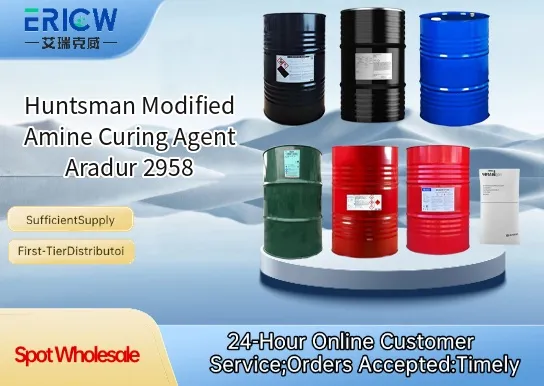
Low-viscosity liquid formulation enabling excellent mixing and processing with epoxy resins.
Room-temperature curing capability with good pot life for flexible manufacturing scheduling.
Enhanced chemical resistance, particularly to alkalis and solvents, in cured epoxy systems.
Improved flexibility and impact resistance compared to conventional aliphatic amines.
Reduced volatility and amine odor, supporting safer handling and improved workplace hygiene.
Industrial flooring coatings requiring durability and chemical exposure resistance.
Concrete repair mortars and structural strengthening systems.
Electrical encapsulation and potting compounds for medium-voltage components.
Marine and offshore protective coatings for above-water infrastructure.
Adhesives and composite matrices in wind energy and transportation sectors.
| Chemical Type | Modified aliphatic amine |
| Product Form | Liquid |
| Appearance | Pale yellow to amber clear liquid |
| Density (at 25°C) | 0.92–0.96 g/cm³ |
| Viscosity (at 25°C) | 150–300 mPa·s |
| Amine Value | 340–380 mg KOH/g |
| Primary Applications | Epoxy resin curing for coatings, adhesives, and composites |
| Key Features | Room-temperature cure, low odor, flexible cured network |
Q1: What is the primary function of Aradur 2958 in epoxy systems?
A: Aradur 2958 is a modified amine curing agent designed to provide efficient room-temperature or elevated-temperature cure of epoxy resins, delivering good chemical resistance, mechanical strength, and reduced amine blush compared to conventional aliphatic amines.
Q2: Is Aradur 2958 suitable for use in coatings requiring low VOC and low odor?
A: Yes — as a non-volatile, low-odor modified amine, Aradur 2958 supports formulations targeting reduced VOC emissions and improved workplace handling, particularly in industrial maintenance and protective coating applications.
Q3: How does Aradur 2958 compare to standard DETA or TETA in terms of reactivity and handling safety?
A: Aradur 2958 offers moderated reactivity versus highly reactive polyamines like DETA or TETA, resulting in extended pot life and reduced skin sensitization potential. It maintains effective cure performance while improving formulation safety and process control.
Q4: Can Aradur 2958 be used in high-solids or solvent-free epoxy systems?
A: Yes — its low volatility and compatibility with common epoxy resins make it well-suited for high-solids, low-VOC, and 100%-solids epoxy formulations, including flooring, grouts, and structural adhesives.
Q5: What storage conditions are recommended to maintain optimal performance?
A: Store in original sealed containers at temperatures between 10°C and 30°C, protected from moisture and direct sunlight. Prolonged exposure to humidity or freezing may affect viscosity and reactivity.
Contact With Us:
E-mail: wangxingqiang@ericwchem.com
Have a Questions? Call Us:
Add:
Building A1, Jiete Industrial Park, Huangpu District, Guangzhou City, Guangdong Province, China