English
 Español
 tiếng việt
 русский
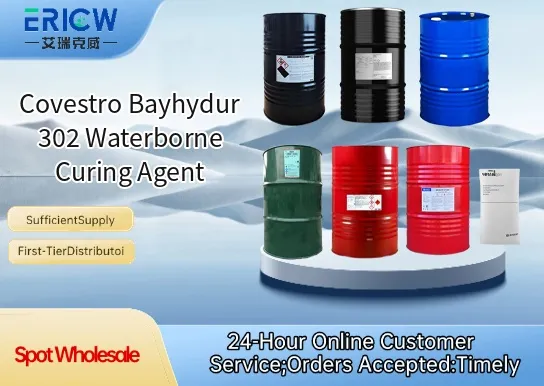
Waterborne polyisocyanate crosslinker enabling low-VOC, high-performance coatings.
Excellent compatibility with acrylic, polyester, and hybrid waterborne resins.
Good hydrolytic stability and extended pot life under controlled conditions.
Delivers superior hardness, chemical resistance, and gloss retention in cured films.
Designed for ambient- and forced-dry curing systems without requiring catalysts.
Industrial maintenance coatings for metal substrates.
Waterborne automotive refinish clearcoats and basecoats.
Architectural and decorative protective coatings for interior wood and metal.
Plastic coatings for automotive interior parts and consumer electronics.
Coil coating primers and topcoats for pre-painted steel and aluminum.
| Chemical Type | Aliphatic polyisocyanate (HDI-based) |
| Product Form | Aqueous dispersion |
| Appearance | Clear to slightly hazy liquid |
| pH (25 °C) | 7.0 – 8.5 |
| Solids Content (wt%) | 45 – 50 |
| NCO Content (wt%) | 6.5 – 7.5 |
| Viscosity (25 °C, mPa·s) | 150 – 400 |
| Storage Stability (unopened, 25 °C) | ≥ 6 months |
Q1: What is Bayhydur 302 and how does it differ from solvent-borne curing agents?
A: Bayhydur 302 is a water-dispersible aliphatic polyisocyanate crosslinker designed specifically for high-performance waterborne coating systems. Unlike traditional solvent-borne curing agents, it enables low-VOC formulations without compromising film hardness, chemical resistance, or gloss retention—making it suitable for demanding industrial and decorative applications where environmental compliance and performance are both critical.
Q2: Which types of resins is Bayhydur 302 compatible with?
A: Bayhydur 302 is primarily formulated for use with waterborne hydroxyl-functional acrylics, polyesters, and hybrid dispersions. It demonstrates good compatibility and reactivity with a broad range of commercially available waterborne OH-functional binders, supporting stable one-component storage and efficient two-component cure at ambient or elevated temperatures.
Q3: How should Bayhydur 302 be handled and stored to maintain stability?
A: Store in original sealed containers at temperatures between 5 °C and 30 °C, protected from moisture, direct sunlight, and freezing. Once opened, minimize exposure to humid air and ensure containers are tightly closed after each use. Avoid prolonged contact with water prior to formulation, as premature dispersion may affect viscosity and shelf life in the unblended state.
Q4: Can Bayhydur 302 be used in ambient-cure systems?
A: Yes—Bayhydur 302 is engineered for ambient-cure applications, delivering robust crosslinking without forced drying. Cure speed and final properties depend on formulation design, humidity, substrate, and film thickness; catalysts such as tertiary amines or tin-free alternatives may be added to fine-tune pot life and through-cure performance when needed.
Q5: Is Bayhydur 302 suitable for coatings requiring FDA compliance or food-contact approval?
A: Bayhydur 302 itself is not pre-approved for direct food contact. Its suitability for regulated applications depends entirely on the full formulation—including resin, additives, and processing conditions—as well as final testing and regulatory evaluation by the end-user. Covestro provides technical support and documentation to assist customers in their compliance assessments.
Contact With Us:
E-mail: wangxingqiang@ericwchem.com
Have a Questions? Call Us:
Add:
Building A1, Jiete Industrial Park, Huangpu District, Guangzhou City, Guangdong Province, China