English
 Español
 tiếng việt
 русский
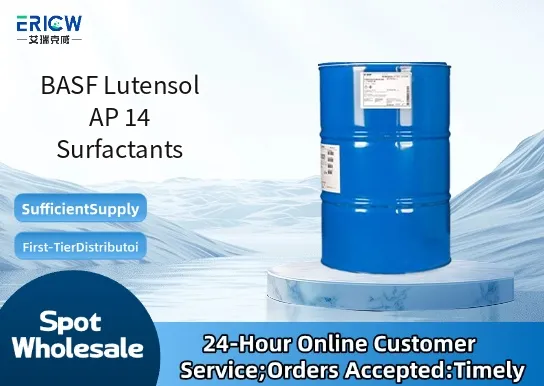
Nonionic alcohol ethoxylate with high cloud point (>95 °C), ensuring excellent thermal stability in hot-process formulations.
Outstanding emulsification and solubilization capacity for hydrophobic actives, including oils and waxes.
Low foaming profile suitable for high-shear and industrial cleaning applications where foam control is critical.
Good biodegradability (OECD 301B compliant) and favorable ecotoxicological profile for sustainable product design.
Compatible with electrolytes and a broad pH range (pH 4–12), enabling formulation flexibility in complex systems.
Industrial and institutional (I&I) hard-surface cleaners, especially alkaline degreasers and metal cleaners.
Agrochemical formulations, including EC (emulsifiable concentrate) and SC (suspension concentrate) adjuvants.
Textile auxiliaries such as scouring and dyeing assistants for polyester and blended fabrics.
Paint and coating additives for pigment dispersion stabilization and rheology modification.
Personal care cleansing bases requiring mildness, clarity, and low-irritancy—particularly in syndet bars and liquid cleansers.
| Chemical Type | Alcohol ethoxylate (C13–C15 linear alcohol, ~14 mol EO) |
| Product Form | Liquid |
| Appearance | Pale yellow to colorless, clear to slightly hazy liquid at 25 °C |
| Cloud Point (1% aqueous solution) | ≥ 95 °C |
| pH (1% aqueous solution, 25 °C) | 5.5–7.0 |
| Active Content (w/w %) | 99–100% |
| Saponification Value (mg KOH/g) | 28–32 |
| Primary Applications | Emulsifier, solubilizer, wetting agent, and co-surfactant in industrial, agrochemical, and personal care systems |
Q1: What is the primary function of Lutensol AP 14 in industrial formulations?
A: Lutensol AP 14 is a nonionic alcohol ethoxylate surfactant primarily used for its excellent emulsifying, wetting, and solubilizing properties in aqueous systems. It supports stable oil-in-water emulsions and enhances surface activity in cleaning, agrochemical, and industrial maintenance applications.
Q2: Is Lutensol AP 14 suitable for low-foaming applications?
A: Yes — due to its branched alcohol backbone and optimized ethoxylation profile, Lutensol AP 14 delivers inherently low foam generation, making it well-suited for high-shear processes, CIP (clean-in-place) systems, and applications where foam control is critical.
Q3: How does temperature affect the performance of Lutensol AP 14?
A: Lutensol AP 14 exhibits good cloud point behavior and maintains effective surfactant performance across a broad temperature range. Its cloud point typically falls within the warm-to-hot operational window, supporting consistent emulsification and detergency in both ambient and elevated temperature processes.
Q4: Can Lutensol AP 14 be blended with ionic surfactants?
A: Yes — Lutensol AP 14 is generally compatible with anionic and cationic surfactants in carefully designed formulations. Synergistic effects are often observed in mixed systems, particularly for enhanced detergency or emulsion stability, though compatibility should always be verified experimentally under intended use conditions.
Q5: What are typical dosage guidelines for Lutensol AP 14 in formulated products?
A: Dosage depends on formulation requirements and desired performance, but Lutensol AP 14 is typically used at low concentrations — generally ranging from 0.1% to 2% by weight — in industrial cleaners, pesticide concentrates, and metalworking fluids.
Contact With Us:
E-mail: wangxingqiang@ericwchem.com
Have a Questions? Call Us:
Add:
Building A1, Jiete Industrial Park, Huangpu District, Guangzhou City, Guangdong Province, China