English
 Español
 tiếng việt
 русский
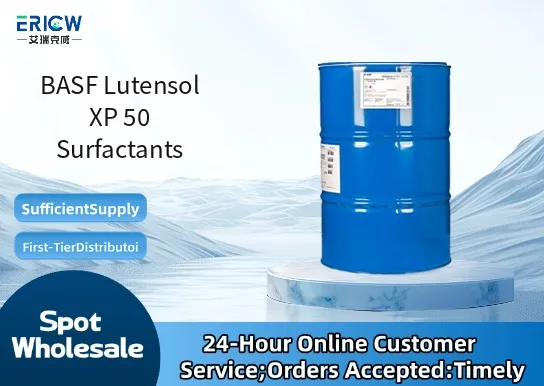
Nonionic ethoxylated alcohol surfactant with balanced hydrophilic-lipophilic properties for versatile formulation performance.
Excellent wetting, dispersing, and emulsifying capabilities in aqueous systems across a broad pH range.
Low foaming profile suitable for industrial cleaning and high-shear processing applications.
Good biodegradability and favorable environmental profile aligned with EU Ecolabel and OECD 301 test criteria.
Thermally stable and compatible with common anionic, nonionic, and cationic ingredients in complex formulations.
Industrial and institutional (I&I) hard-surface cleaners, including floor, glass, and stainless-steel cleaners.
Agrochemical adjuvants for improving active ingredient solubilization and spray droplet retention.
Textile auxiliaries such as scouring agents, dye dispersants, and leveling agents in dyeing processes.
Paints and coatings additives for pigment dispersion, gloss enhancement, and viscosity stabilization.
Oilfield chemicals, particularly in drilling fluid emulsifiers and pipeline cleaning formulations.
| Chemical Type | Nonionic: C13–C15 fatty alcohol ethoxylate (EO ≈ 5 mol) |
| Product Form | Liquid |
| Appearance | Pale yellow to colorless, clear to slightly hazy liquid |
| pH (1% aqueous solution, 20 °C) | 5.5–7.0 |
| Cloud Point (1% aqueous solution) | ≈ 62–67 °C |
| Solubility in Water | Freely soluble at room temperature |
| Primary Applications | Cleaning, emulsification, dispersion, wetting |
| Key Features | Low foaming, good electrolyte tolerance, low odor, low volatility |
Q1: What is the primary chemical nature of Lutensol XP 50?
A: Lutensol XP 50 is a nonionic surfactant based on ethoxylated linear alcohols, specifically derived from C13–C15 fatty alcohols with an average of approximately 50 moles of ethylene oxide per molecule. Its high EO content imparts excellent water solubility, low foaming characteristics, and good compatibility with electrolytes.
Q2: In which types of industrial cleaning formulations is Lutensol XP 50 most commonly used?
A: It is widely employed in low-foaming, high-efficiency aqueous cleaning systems—especially for metalworking fluids, industrial degreasers, and CIP (clean-in-place) solutions—where stable performance under hard water conditions and resistance to phase separation at elevated temperatures are required.
Q3: How does Lutensol XP 50 perform in formulations containing builders or other surfactants?
A: It exhibits good compatibility with common anionic surfactants (e.g., LAS, AES), amphoteric agents, and inorganic builders such as sodium carbonate or sodium silicate. Synergistic detergency enhancement is often observed when combined with shorter-chain ethoxylates or alkylphenol ethoxylates in balanced blends.
Q4: Is Lutensol XP 50 suitable for low-temperature cleaning applications?
A: Yes—its high ethoxylation level ensures excellent cold-water solubility and maintains effective soil removal even at ambient or mildly chilled operating temperatures, making it well-suited for energy-efficient cleaning processes.
Contact With Us:
E-mail: wangxingqiang@ericwchem.com
Have a Questions? Call Us:
Add:
Building A1, Jiete Industrial Park, Huangpu District, Guangzhou City, Guangdong Province, China