English
 Español
 tiếng việt
 русский
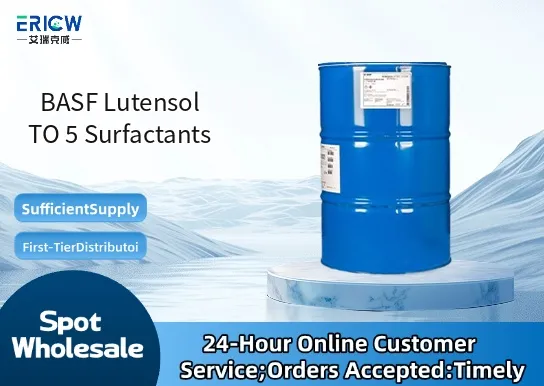
Nonionic surfactant based on linear alcohol ethoxylate (C13–C15) with optimized hydrophilic-lipophilic balance (HLB ≈ 5).
Excellent emulsifying and solubilizing performance in oil-in-water systems, particularly effective at low temperatures.
Low foaming profile suitable for industrial cleaning and metalworking fluid formulations requiring controlled foam generation.
Good biodegradability and favorable ecotoxicological profile in accordance with OECD 301 series testing guidelines.
Stable across a broad pH range (pH 4–12), enabling compatibility with acidic, neutral, and alkaline formulations.
Metalworking fluids — as an emulsifier and stabilizer in soluble oil concentrates.
Industrial cleaners — for heavy-duty degreasing of machinery, parts, and equipment.
Agrochemical formulations — as a co-emulsifier in EC (emulsifiable concentrate) and SE (soluble emulsion) products.
Textile auxiliaries — for scouring and desizing bath stabilization in cotton processing.
Paints and coatings — as a wetting and dispersing aid in pigment grinding and low-VOC architectural formulations.
| Chemical Type | Linear alcohol ethoxylate (C13–C15, ~5 EO units) |
| Product Form | Pale yellow to amber viscous liquid |
| Appearance | Clear to slightly hazy, homogeneous liquid at 25 °C |
| HLB Value | Approx. 5.0 |
| Active Content | ≥ 98.0 wt-% |
| Density (20 °C) | 0.96–0.98 g/cm³ |
| Cloud Point (1% aqueous solution) | ≈ 35–40 °C |
| Primary Applications | Emulsification, solubilization, low-foam cleaning, formulation stabilization |
Q1: What is the primary chemical nature of Lutensol TO 5?
A: Lutensol TO 5 is a nonionic surfactant based on a linear alcohol ethoxylate, specifically derived from a C13–C15 linear fatty alcohol with an average of approximately 5 moles of ethylene oxide per molecule. Its structure provides balanced hydrophilic-lipophilic properties suitable for emulsification and solubilization in industrial formulations.
Q2: In which types of industrial cleaning applications is Lutensol TO 5 commonly used?
A: It is frequently employed in alkaline and neutral-pH industrial cleaning formulations—such as metalworking cleaners, hard-surface degreasers, and textile pre-treatment baths—where stable emulsification of mineral oils and light hydrocarbons is required, along with good compatibility with builders and other surfactants.
Q3: How does Lutensol TO 5 perform in hard water conditions?
A: As a nonionic surfactant, Lutensol TO 5 exhibits excellent tolerance to water hardness and remains effective in the presence of calcium and magnesium ions, making it well-suited for use in municipal or process water without requiring additional chelating agents in many standard formulations.
Q4: Is Lutensol TO 5 compatible with anionic and cationic surfactants?
A: It shows broad compatibility with most anionic surfactants—such as alkylbenzene sulfonates and alkyl sulfates—enabling synergistic performance in blended systems. Compatibility with cationic surfactants is generally limited and formulation-dependent; testing under intended use conditions is recommended before co-formulation.
Q5: What are typical dosage guidelines for Lutensol TO 5 in formulated products?
A: Dosage depends on the specific application and desired performance profile, but it is typically used at low concentrations—generally ranging from 0.1% to 2% by weight—in final formulations. Optimal levels should be determined through laboratory evaluation to balance efficacy, cost, and compatibility.
Contact With Us:
E-mail: wangxingqiang@ericwchem.com
Have a Questions? Call Us:
Add:
Building A1, Jiete Industrial Park, Huangpu District, Guangzhou City, Guangdong Province, China