English
 Español
 tiếng việt
 русский
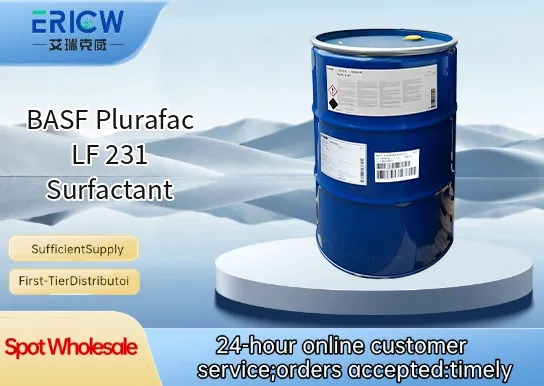
Nonionic surfactant based on linear alcohol ethoxylate chemistry with optimized hydrophilic-lipophilic balance (HLB ≈ 13.5).
Excellent wetting, emulsifying, and solubilizing performance in aqueous systems across a broad pH range (pH 4–12).
Low foaming profile—suitable for high-shear and continuous industrial processes where foam control is critical.
Good biodegradability (OECD 301 compliant) and favorable environmental and toxicological profile for industrial formulations.
Stable in the presence of electrolytes and compatible with anionic, nonionic, and cationic ingredients in multi-component blends.
Industrial and institutional (I&I) hard-surface cleaners, including floor, glass, and stainless-steel cleaners.
Agrochemical adjuvants for enhancing herbicide and fungicide spray dispersion and leaf coverage.
Textile auxiliaries in dyeing and finishing processes, particularly as a leveling and dispersing agent.
Paints and coatings additives for pigment wetting, dispersion stabilization, and gloss enhancement.
Oilfield chemicals, including demulsifiers and pipeline cleaning formulations requiring low-foam surfactancy.
| Chemical Type | Linear alcohol ethoxylate (C12–C15, ~9 EO units) |
| Product Form | Liquid |
| Appearance | Pale yellow to colorless viscous liquid |
| HLB Value | Approx. 13.5 |
| pH (1% aqueous solution) | 5.5–7.0 |
| Cloud Point (1% solution) | 68–72 °C |
| Solubility in Water | Complete miscibility at room temperature |
| Primary Applications | Wetting agent, emulsifier, solubilizer in industrial cleaning and specialty formulations |
Q1: What is the primary function of Plurafac LF 231 in industrial formulations?
A: Plurafac LF 231 is a nonionic surfactant designed primarily for wetting, emulsification, and solubilization in aqueous systems. It is especially valued for its ability to reduce surface tension rapidly and improve substrate penetration in demanding industrial cleaning, agrochemical, and coating applications.
Q2: Is Plurafac LF 231 suitable for use in low-foaming formulations?
A: Yes — it is formulated to deliver effective performance with inherently low foaming characteristics, making it well-suited for high-shear processes such as industrial CIP (clean-in-place) systems, spray applications, and automated dispensing where foam control is critical.
Q3: How does Plurafac LF 231 perform in hard water conditions?
A: As a nonionic surfactant, Plurafac LF 231 maintains good stability and performance across a broad range of water hardness levels, without significant loss of activity or precipitation — unlike many anionic surfactants that are sensitive to calcium and magnesium ions.
Q4: Can Plurafac LF 231 be used in environmentally sensitive applications?
A: It exhibits favorable biodegradability profiles under standard aerobic test conditions and is not classified as persistent, bioaccumulative, or toxic (PBT) according to current regulatory screening criteria. Formulators should still assess final product compliance with regional environmental regulations.
Q5: What is the typical dosage range for Plurafac LF 231 in functional formulations?
A: Dosage depends on formulation requirements and desired performance, but it is typically used at low concentrations — generally ranging from 0.1% to 2% by weight — with optimization recommended through application-specific testing.
Contact With Us:
E-mail: wangxingqiang@ericwchem.com
Have a Questions? Call Us:
Add:
Building A1, Jiete Industrial Park, Huangpu District, Guangzhou City, Guangdong Province, China