English
 Español
 tiếng việt
 русский
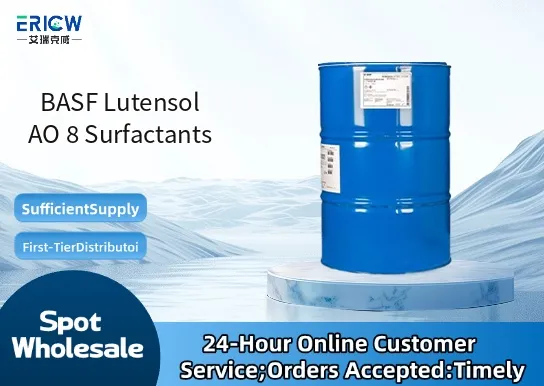
Nonionic surfactant based on alcohol ethoxylate chemistry with optimized ethoxylation (EO ≈ 8).
Excellent wetting, emulsifying, and dispersing performance in aqueous systems.
Good compatibility with electrolytes and other surfactants, including anionics and cationics.
Low foaming profile suitable for industrial cleaning and high-shear processes.
Biodegradable under aerobic conditions, supporting sustainable formulation design.
Industrial and institutional cleaners (e.g., floor cleaners, degreasers).
Agrochemical formulations (e.g., EC, SE, and SC concentrates).
Textile auxiliaries (e.g., scouring, dye leveling, and softening agents).
Paints and coatings (e.g., pigment dispersion and latex stabilization).
Home care products (e.g., liquid dishwashing detergents and all-purpose cleaners).
| Chemical Type | Alcohol Ethoxylate (C13–C15 linear alcohols, avg. EO = 8) |
| Product Form | Liquid |
| Appearance | Pale yellow to colorless, clear to slightly hazy liquid |
| pH (1% aqueous solution, 20 °C) | 5.5 – 7.0 |
| Active Content (wt %) | 99.0 – 101.0 |
| Cloud Point (1% aqueous solution) | 55 – 65 °C |
| Viscosity (20 °C) | 200 – 500 mPa·s |
| Free Fatty Alcohol (max) | 1.0 wt % |
Q1: What is the primary chemical nature of Lutensol AO 8?
A: Lutensol AO 8 is a nonionic surfactant based on an alcohol ethoxylate structure, specifically derived from a linear C12–C14 fatty alcohol condensed with approximately 8 moles of ethylene oxide per mole of alcohol.
Q2: In which types of industrial cleaning formulations is Lutensol AO 8 most commonly applied?
A: It is widely used in low-foaming, high-efficiency aqueous cleaners for metalworking, industrial parts washing, and hard-surface cleaning—particularly where good soil removal, water rinsability, and compatibility with builders or other surfactants are required.
Q3: How does temperature affect the performance of Lutensol AO 8 in aqueous systems?
A: As a typical AEO-type surfactant, Lutensol AO 8 exhibits reduced solubility and increased cloud point behavior at elevated temperatures; its cloud point generally falls within the range of 55–65 °C, making it suitable for warm-water cleaning applications but requiring formulation adjustments for high-temperature stability.
Q4: Is Lutensol AO 8 compatible with common anionic and cationic additives?
A: It demonstrates good compatibility with many anionic surfactants (e.g., LAS, AES) and chelating agents in neutral to mildly alkaline systems; however, direct combination with strongly cationic species should be evaluated case-by-case due to potential interactions affecting micelle formation or solution clarity.
Q5: What are key handling and storage recommendations for Lutensol AO 8?
A: Store in original sealed containers at temperatures between 5 °C and 30 °C, protected from freezing and prolonged exposure to high heat or direct sunlight; avoid contamination with strong oxidizers or acids, and ensure adequate ventilation during handling as with typical industrial chemicals.
Contact With Us:
E-mail: wangxingqiang@ericwchem.com
Have a Questions? Call Us:
Add:
Building A1, Jiete Industrial Park, Huangpu District, Guangzhou City, Guangdong Province, China