English
 Español
 tiếng việt
 русский
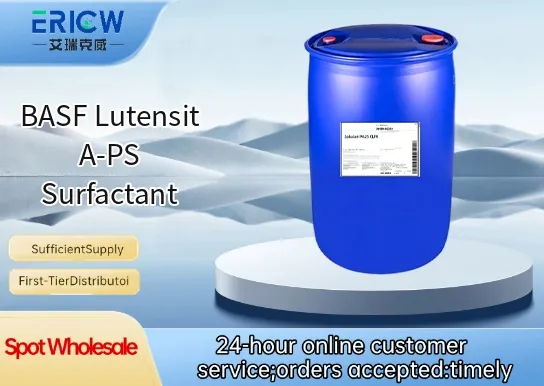
Highly effective anionic surfactant based on secondary alcohol ethoxysulfate (AES) chemistry.
Excellent foaming performance with stable, rich, and creamy foam even in hard water.
Outstanding detergency and soil removal across a broad pH range (pH 5–10).
Good compatibility with cationic, nonionic, and amphoteric surfactants in complex formulations.
Eco-preferred profile: readily biodegradable (OECD 301 compliant) and low aquatic toxicity.
Household liquid dishwashing detergents.
Laundry detergent liquids and compact powders.
Personal care cleansers, including hand soaps and body washes.
Industrial and institutional (I&I) cleaning formulations.
Carpet and hard-surface cleaners requiring high rinseability and low residue.
| Chemical Type | Secondary alcohol ethoxysulfate (AES), sodium salt |
| Product Form | Pale yellow to amber viscous liquid |
| Appearance | Clear to slightly hazy liquid at 25 °C |
| Active Matter Content | ≈ 28–30 wt.% (as supplied) |
| pH (1% aqueous solution) | 6.5–8.0 |
| Density (20 °C) | 1.04–1.07 g/cm³ |
| Solubility | Freely soluble in water; miscible with common polar solvents |
| Storage Stability | Stable for ≥12 months at 5–30 °C in sealed containers |
Q1: What is the primary function of Lutensit A-PS in formulations?
A: Lutensit A-PS is a polymeric, nonionic surfactant designed primarily to provide steric stabilization in aqueous dispersions and emulsions. It helps prevent particle aggregation by forming a protective layer around dispersed phases, especially in pigment-rich or high-solids systems.
Q2: Is Lutensit A-PS suitable for use in low-VOC or waterborne coatings?
A: Yes — Lutensit A-PS is fully compatible with waterborne systems and supports VOC reduction strategies. It does not contain volatile organic solvents and contributes to stable, low-viscosity dispersions without compromising film formation or storage stability.
Q3: How does Lutensit A-PS differ from conventional low-molecular-weight surfactants?
A: Unlike small-molecule surfactants, Lutensit A-PS offers enhanced anchoring and steric hindrance due to its polymeric architecture. This results in superior long-term dispersion stability, reduced sensitivity to electrolytes, and lower tendency to migrate or foam excessively in end-use applications.
Q4: Can Lutensit A-PS be used in combination with ionic dispersants?
A: Yes — it is commonly used in hybrid stabilization systems alongside anionic or cationic dispersants. Its nonionic nature minimizes electrostatic interference, allowing synergistic stabilization mechanisms while improving robustness across pH and ionic strength variations.
Q5: What are typical dosage guidelines for Lutensit A-PS in pigment dispersions?
A: Dosage depends on pigment type, loading, and desired stability profile, but it is typically used at low concentrations — generally ranging from 0.1% to 2% by weight relative to pigment solids. Optimization through lab-scale trials is recommended to balance performance and cost efficiency.
Contact With Us:
E-mail: wangxingqiang@ericwchem.com
Have a Questions? Call Us:
Add:
Building A1, Jiete Industrial Park, Huangpu District, Guangzhou City, Guangdong Province, China