English
 Español
 tiếng việt
 русский
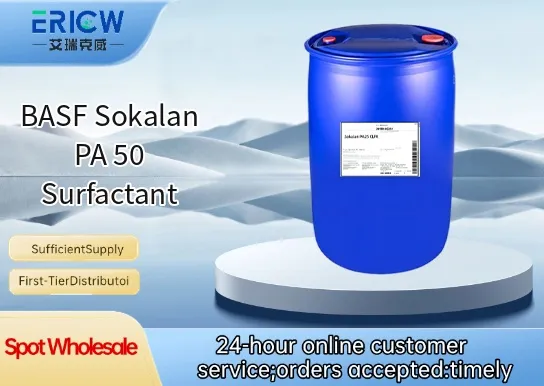
High-performance polyacrylate-based associative thickener with excellent rheology control.
Delivers outstanding shear-thinning behavior and post-shear viscosity recovery in aqueous systems.
Provides superior compatibility with anionic, nonionic, and zwitterionic surfactants.
Enhances suspension stability of pigments and fillers without compromising foam profile.
Low-VOC, APEO-free formulation supporting sustainable product design and regulatory compliance.
Architectural coatings (interior/exterior flat and low-sheen paints).
Industrial maintenance coatings requiring sag resistance and leveling performance.
Water-based adhesives and construction mortars.
Agrochemical suspensions (SC, SE formulations) for improved particle dispersion stability.
Home care and institutional cleaning products requiring controlled viscosity and pumpability.
| Chemical Type | Polyacrylic acid derivative (associative thickener) |
| Product Form | Aqueous solution (~50% active content) |
| Appearance | Clear to slightly opalescent, low-viscosity liquid |
| pH (1% aqueous solution) | 3.0 – 4.5 |
| Density (20 °C) | ~1.05 – 1.08 g/cm³ |
| Solubility | Completely miscible with water; compatible with common co-solvents (e.g., glycols, ethanol) |
| Primary Applications | Rheology modifier in waterborne coatings, agrochemicals, and cleaning formulations |
| Key Features | Non-ionic associative thickening, low odor, freeze-thaw stable (≥3 cycles) |
Q1: What is the primary function of Sokalan PA 50 in formulations?
A: Sokalan PA 50 is a polyacrylic acid-based polyelectrolyte surfactant designed primarily for dispersion stabilization and rheology modification. It helps prevent particle agglomeration in aqueous systems and supports uniform pigment or filler distribution in coatings, construction additives, and industrial cleaners.
Q2: Is Sokalan PA 50 suitable for use in low-VOC or eco-labeled formulations?
A: Yes — Sokalan PA 50 is an anionic, water-soluble polymer free of alkylphenol ethoxylates (APEOs), formaldehyde, and volatile organic compounds (VOCs). Its composition aligns with common sustainability criteria for green building standards and eco-labeling programs, though final compliance depends on full formulation assessment.
Q3: How does Sokalan PA 50 differ from conventional non-ionic surfactants?
A: Unlike typical non-ionic surfactants, Sokalan PA 50 functions as a polymeric dispersant with strong electrostatic and steric stabilization mechanisms. It offers enhanced resistance to electrolytes and pH variations, and provides long-term colloidal stability without foaming issues commonly associated with low-molecular-weight surfactants.
Q4: What is the recommended dosage range for optimal performance?
A: Dosage depends on formulation requirements, but Sokalan PA 50 is typically used at low concentrations — generally ranging from 0.1% to 2% by weight relative to the total formulation — with adjustments based on solid content, particle surface area, and desired viscosity profile.
Q5: Can Sokalan PA 50 be used in combination with other additives such as defoamers or biocides?
A: Yes — Sokalan PA 50 shows good compatibility with many common formulation additives, including silicon- and oil-based defoamers and broad-spectrum biocides. However, compatibility testing under actual processing and storage conditions is recommended to ensure performance stability and avoid unintended interactions.
Contact With Us:
E-mail: wangxingqiang@ericwchem.com
Have a Questions? Call Us:
Add:
Building A1, Jiete Industrial Park, Huangpu District, Guangzhou City, Guangdong Province, China