English
 Español
 tiếng việt
 русский
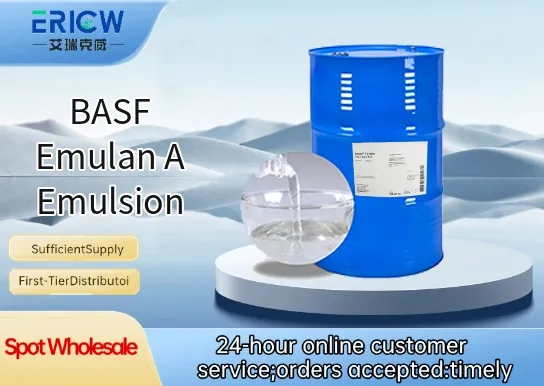
Highly stable oil-in-water emulsion based on non-ionic surfactants for broad compatibility with actives and polymers.
Low foaming profile, enabling efficient processing in high-shear mixing and continuous production lines.
Excellent emulsifying performance across a wide pH range (pH 4–10) and moderate temperature conditions.
Readily biodegradable formulation aligned with OECD 301 standards, supporting sustainable manufacturing goals.
Free of alkylphenol ethoxylates (APEOs), parabens, and formaldehyde donors — compliant with major cosmetic and industrial regulatory frameworks.
Personal care emulsions: creams, lotions, and after-sun formulations requiring light texture and rapid skin absorption.
Home care products: gentle dishwashing liquids, all-purpose cleaners, and fabric softener concentrates.
Industrial metalworking fluids: semi-synthetic coolants where stable oil dispersion and corrosion inhibition are critical.
Agricultural adjuvants: carrier systems for hydrophobic agrochemicals to enhance foliar uptake and rainfastness.
Pharmaceutical topical bases: O/W vehicles for dermal gels and ointments requiring low irritation potential.
| Chemical Type | Non-ionic surfactant blend (fatty alcohol ethoxylates & polyglyceryl esters) |
| Product Form | Opaque, viscous liquid emulsion |
| Appearance | Off-white to pale yellow, homogeneous liquid |
| pH (1% aqueous solution, 25°C) | 6.0 – 7.5 |
| Active Content (wt %) | 28 – 32% |
| Viscosity (mPa·s, Brookfield RV, 25°C) | 1,500 – 3,500 |
| Storage Stability | Stable for ≥12 months at 5–30°C; avoid freezing |
| Primary Applications | Emulsifier/stabilizer in personal care, home care, industrial, and agrochemical formulations |
Q1: What is the primary function of Emulan A Emulsion in formulations?
A: Emulan A Emulsion is a non-ionic O/W emulsifier designed to stabilize oil-in-water systems, particularly in aqueous-based coatings, agrochemicals, and industrial maintenance products. It supports uniform dispersion of hydrophobic actives and enhances formulation robustness across varying pH and temperature conditions.
Q2: Is Emulan A Emulsion compatible with ionic surfactants and common co-emulsifiers?
A: Yes, Emulan A Emulsion exhibits good compatibility with anionic, cationic, and amphoteric surfactants, as well as with fatty alcohols and esters commonly used in emulsion stabilization. Compatibility should be verified empirically in the final formulation due to system-specific interactions.
Q3: How should Emulan A Emulsion be incorporated into a formulation?
A: It is typically added during the aqueous phase or pre-mixed with the oil phase prior to emulsification. For optimal performance, it is recommended to introduce Emulan A Emulsion at temperatures above its cloud point (generally above 40 °C), followed by controlled cooling under shear to ensure stable droplet formation.
Q4: Does Emulan A Emulsion contribute to film formation or affect dry-film properties?
A: Emulan A Emulsion is not film-forming on its own but may influence film integrity, gloss, and water resistance in coating systems by modulating particle morphology and interfacial behavior during drying. Its impact depends on overall formulation design and polymer matrix characteristics.
Q5: What are typical dosage ranges for Emulan A Emulsion in commercial applications?
A: Dosage generally ranges from 0.1% to 2% by weight relative to the total formulation, depending on oil phase content, desired droplet size, and stability requirements. Optimization is recommended through small-scale trials to balance emulsification efficiency and cost-effectiveness.
Contact With Us:
E-mail: wangxingqiang@ericwchem.com
Have a Questions? Call Us:
Add:
Building A1, Jiete Industrial Park, Huangpu District, Guangzhou City, Guangdong Province, China