English
 Español
 tiếng việt
 русский
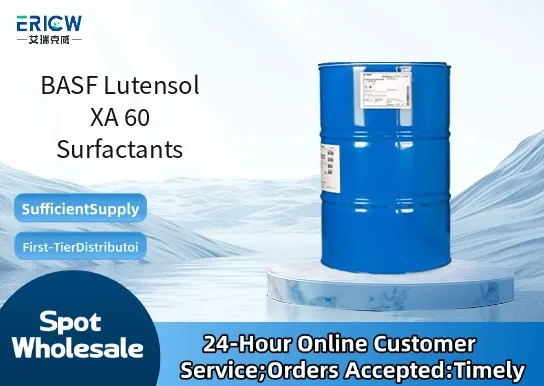
Nonionic surfactant based on ethoxylated linear alcohol with optimized hydrophilic-lipophilic balance (HLB ≈ 13.5) for broad compatibility.
Excellent emulsification and solubilization performance in aqueous systems, even at low temperatures.
Low foaming profile suitable for high-shear industrial cleaning and metalworking applications.
Good biodegradability and favorable ecotoxicological profile aligned with OECD 301 standards.
Stable in hard water and tolerant to common electrolytes, ensuring consistent performance in formulated products.
Industrial and institutional cleaners (I&I), including alkaline degreasers and CIP formulations.
Metalworking fluids, especially semi-synthetic and soluble oil concentrates.
Agrochemical adjuvants for enhancing active ingredient dispersion and foliar uptake.
Textile auxiliaries, such as scouring and dyeing assistants in cotton processing.
Paint and coating additives for pigment wetting and latex stabilization.
| Chemical Type | Nonionic: Ethoxylated linear C13–C15 alcohol (approx. 60 mol EO) |
| Product Form | Liquid |
| Appearance | Pale yellow to colorless, clear to slightly hazy liquid |
| HLB Value | ≈ 13.5 |
| pH (1% aqueous solution) | 5.5 – 7.0 |
| Density (20 °C) | 1.02 – 1.04 g/cm³ |
| Cloud Point (1% aqueous solution) | 68 – 72 °C |
| Solubility | Freely soluble in water; miscible with common organic solvents |
Q1: What is the primary function of Lutensol XA 60 in industrial formulations?
A: Lutensol XA 60 is a nonionic surfactant based on alkylphenol ethoxylate chemistry, primarily used for its excellent wetting, emulsifying, and solubilizing properties in demanding industrial cleaning, metalworking, and agrochemical applications.
Q2: Is Lutensol XA 60 suitable for low-foaming applications?
A: Yes — due to its branched hydrophobic tail and optimized ethoxylation profile, Lutensol XA 60 delivers inherently low foam generation, making it well-suited for high-shear processes such as spray cleaning, CIP systems, and continuous industrial operations where foam control is critical.
Q3: How does temperature affect the performance of Lutensol XA 60?
A: Lutensol XA 60 exhibits good thermal stability and maintains effective surface activity across a broad temperature range. Its cloud point is sufficiently high to support performance in warm-to-hot aqueous systems, though formulation pH and electrolyte content may influence its practical working window.
Q4: Can Lutensol XA 60 be blended with ionic surfactants?
A: Yes — it is generally compatible with anionic and cationic surfactants in carefully designed formulations, though interactions (e.g., precipitation or viscosity changes) may occur depending on concentration, pH, and counterion type. Compatibility testing under end-use conditions is recommended.
Q5: What are typical dosage guidelines for Lutensol XA 60 in cleaning concentrates?
A: Dosage depends on formulation requirements and performance targets, but it is typically used at low concentrations — generally ranging from 0.1% to 2% by weight in ready-to-use or diluted cleaning products, with optimal levels determined through application-specific evaluation.
Contact With Us:
E-mail: wangxingqiang@ericwchem.com
Have a Questions? Call Us:
Add:
Building A1, Jiete Industrial Park, Huangpu District, Guangzhou City, Guangdong Province, China