English
 Español
 tiếng việt
 русский
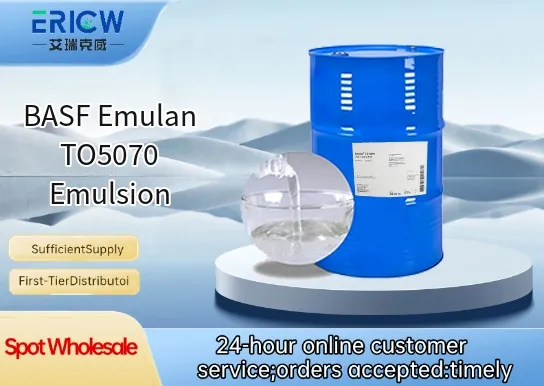
Highly stable oil-in-water emulsion with excellent shear resistance and long-term storage stability.
Low viscosity profile enabling easy handling, pumping, and integration into aqueous formulations.
Non-ionic surfactant system offering broad compatibility with electrolytes, acids, bases, and other functional additives.
Designed for low foaming behavior—ideal for high-speed coating, spraying, and industrial cleaning applications.
Eco-preferred formulation with no APEOs (alkylphenol ethoxylates) and compliant with major global regulatory frameworks.
Industrial metalworking fluids—including semi-synthetic and soluble oil concentrates.
High-performance aqueous coatings and architectural paint additives for pigment dispersion and film formation.
Agrochemical adjuvants for enhancing active ingredient solubilization and foliar retention.
Specialty cleaning formulations for precision parts, electronics, and optical components.
Textile auxiliaries in dyeing and finishing processes requiring stable emulsification of hydrophobic agents.
| Chemical Type | Non-ionic emulsifier blend (fatty alcohol ethoxylates & co-surfactants) |
| Product Form | Opaque, free-flowing liquid emulsion |
| Appearance | Off-white to pale yellow, homogeneous liquid |
| pH (1% aqueous solution, 20°C) | 6.0 – 7.5 |
| Active Content (wt%) | 48 – 52% |
| Density (20°C) | 1.02 – 1.06 g/cm³ |
| Cloud Point (1% solution) | ≥ 75°C |
| Primary Applications | Emulsification, solubilization, wetting, and stabilization in aqueous systems |
Q1: What is the primary function of Emulan TO5070 in formulations?
A: Emulan TO5070 is a non-ionic oil-in-water emulsifier designed to stabilize hydrophobic actives and oils in aqueous systems, particularly in low-viscosity, high-shear applications such as rinse-off personal care products and light-duty industrial cleaners.
Q2: Is Emulan TO5070 compatible with common anionic surfactants like SLES or AES?
A: Yes, Emulan TO5070 demonstrates good compatibility with anionic surfactants under typical formulation pH and temperature conditions, supporting stable emulsions without significant viscosity drop or phase separation—though performance should be verified in the final system due to formulation-specific interactions.
Q3: How should Emulan TO5070 be incorporated into a formulation?
A: It is typically added during the aqueous phase preparation or directly to the pre-mixed oil phase before homogenization. For optimal emulsification, it is recommended to incorporate with moderate to high shear and maintain temperatures above its cloud point during processing.
Q4: Does Emulan TO5070 require pH adjustment for stability?
A: Emulan TO5070 is broadly stable across a pH range of approximately 4–10 and does not require strict pH control for functionality; however, extreme pH values outside this range may affect long-term emulsion integrity and should be evaluated case by case.
Q5: Can Emulan TO5070 be used in cold-process formulations?
A: Yes, Emulan TO5070 supports cold-emulsification in many systems, especially when combined with appropriate co-emulsifiers or rheology modifiers—though efficacy depends on oil type, concentration, and mixing efficiency, and pilot-scale validation is advised.
Contact With Us:
E-mail: wangxingqiang@ericwchem.com
Have a Questions? Call Us:
Add:
Building A1, Jiete Industrial Park, Huangpu District, Guangzhou City, Guangdong Province, China