English
 Español
 tiếng việt
 русский
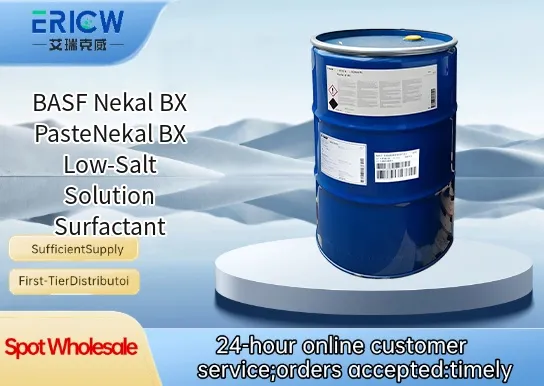
Low-salt formulation minimizes electrolyte interference in sensitive aqueous systems.
High active content ensures efficient surfactant performance with reduced dosing requirements.
Excellent wetting and emulsifying properties across a broad pH range (pH 4–11).
Good compatibility with anionic, nonionic, and amphoteric surfactants in complex formulations.
Stable paste consistency enables easy handling, metering, and dispersion in industrial processes.
Agrochemical adjuvants for herbicide, fungicide, and insecticide concentrates.
Industrial cleaning formulations including metal cleaners and hard-surface degreasers.
Textile auxiliaries for scouring, dye leveling, and softener stabilization.
Coating and ink additives to improve substrate wetting and pigment dispersion.
Personal care emulsion systems requiring low-irritancy, salt-tolerant surfactants.
| Chemical Type | Alkylbenzene sulfonate (branched, low-salt) |
| Product Form | Paste (aqueous) |
| Appearance | Light beige to pale yellow viscous paste |
| pH (1% aqueous solution) | 7.0 – 9.0 |
| Active Matter Content | ≥ 65 wt.% |
| Sodium Sulfate Content | ≤ 3 wt.% |
| Free Acid Content | ≤ 1.5 wt.% |
| Viscosity (25°C, Brookfield RVT, spindle #3, 20 rpm) | 8,000 – 15,000 mPa·s |
Q1: What is the key functional advantage of Nekal BX Low-Salt Solution compared to conventional anionic surfactants?
A: Nekal BX Low-Salt Solution offers significantly reduced electrolyte content, which enhances formulation stability—especially in high-pH or multicomponent systems—and minimizes viscosity spikes or phase separation often seen with traditional alkylbenzene sulfonates.
Q2: In which types of industrial cleaning formulations is Nekal BX most commonly applied?
A: It is widely used in heavy-duty liquid cleaners for metalworking, industrial degreasers, and alkaline CIP (Clean-in-Place) solutions, where strong emulsification of oils and greases, good hard-water tolerance, and compatibility with caustic builders are required.
Q3: How does the low-salt nature of this product affect its handling and storage?
A: The reduced salt content lowers the risk of crystallization at low temperatures and improves long-term storage stability. It remains pumpable and homogeneous under typical warehouse conditions without requiring heated storage or frequent agitation.
Q4: Can Nekal BX be blended with nonionic or amphoteric surfactants?
A: Yes—it exhibits excellent compatibility with common nonionics (e.g., alcohol ethoxylates) and amphoteric surfactants (e.g., betaines), enabling synergistic performance in multifunctional detergent systems without precipitation or cloud point issues.
Contact With Us:
E-mail: wangxingqiang@ericwchem.com
Have a Questions? Call Us:
Add:
Building A1, Jiete Industrial Park, Huangpu District, Guangzhou City, Guangdong Province, China