English
 Español
 tiếng việt
 русский
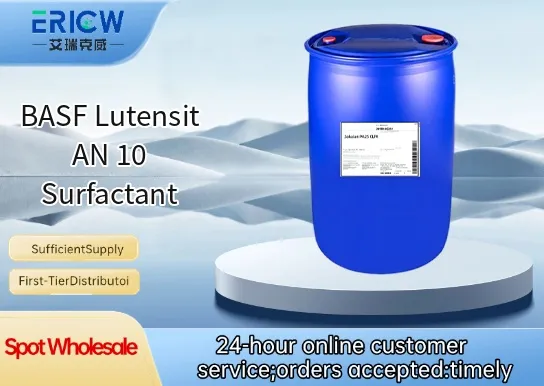
Highly effective anionic surfactant based on alkyl naphthalene sulfonates with excellent wetting and dispersing properties.
Offers superior thermal and hydrolytic stability across a broad pH range (pH 4–11).
Low foaming profile, making it ideal for industrial cleaning and metalworking fluid formulations.
Compatible with a wide range of electrolytes, nonionic surfactants, and biocides.
Readily biodegradable under aerobic conditions, supporting sustainable formulation goals.
Metal cleaning and degreasing agents for automotive and aerospace manufacturing.
Additive in water-based metalworking fluids (e.g., cutting, grinding, and honing fluids).
Dispersant in pigment concentrates and industrial coatings.
Wetting agent in agricultural adjuvants and pesticide formulations.
Component in high-performance industrial detergents for CIP (clean-in-place) systems.
| Chemical Type | Alkyl naphthalene sulfonate (ANS), sodium salt |
| Product Form | Aqueous solution (~10% active content) |
| Appearance | Pale yellow to amber clear liquid |
| pH (1% aqueous solution, 20 °C) | 6.5 – 8.5 |
| Solubility | Completely miscible in water |
| Density (20 °C) | 1.01 – 1.03 g/cm³ |
| Odor | Characteristic mild aromatic odor |
| Primary Applications | Industrial cleaning, metalworking fluids, dispersants, wetting agents |
Q1: What is the primary function of Lutensit AN 10 in industrial formulations?
A: Lutensit AN 10 is an amphoteric surfactant designed to provide mildness, foam stabilization, and viscosity enhancement—particularly in aqueous systems where pH stability and compatibility with anionic or cationic ingredients are required.
Q2: Is Lutensit AN 10 suitable for use in personal care products?
A: Yes—it is commonly used in shampoos, body washes, and facial cleansers due to its low irritation potential, good foaming properties across a broad pH range, and ability to synergize with common anionic surfactants like SLES or SLS.
Q3: How does Lutensit AN 10 behave under varying pH conditions?
A: As an amphoteric surfactant, it exhibits cationic character under acidic conditions, zwitterionic behavior near neutral pH, and increasingly anionic character under alkaline conditions—offering versatile performance and formulation flexibility.
Q4: Can Lutensit AN 10 be used in high-salt or hard-water environments?
A: It demonstrates good tolerance to electrolytes and moderate hardness, maintaining solubility and surface activity in many challenging aqueous systems—though optimal performance is typically achieved in formulations with controlled ionic strength.
Q5: What is the typical dosage range for Lutensit AN 10 in finished products?
A: Dosage depends on formulation requirements but generally ranges from 0.1% to 2% by weight—often used at low concentrations to modify rheology, improve foam quality, or enhance mildness without significantly increasing cost or viscosity.
Contact With Us:
E-mail: wangxingqiang@ericwchem.com
Have a Questions? Call Us:
Add:
Building A1, Jiete Industrial Park, Huangpu District, Guangzhou City, Guangdong Province, China