English
 Español
 tiếng việt
 русский
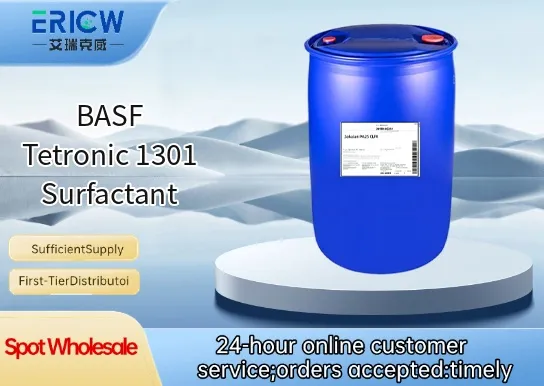
Non-ionic triblock copolymer based on polypropylene oxide (PPO) and polyethylene oxide (PEO) architecture.
Thermoresponsive behavior with reversible micellization above its cloud point, enabling temperature-triggered solubilization and release.
Excellent surface activity and low foaming characteristics in aqueous systems across broad pH ranges.
High biocompatibility and low cytotoxicity, supporting use in pharmaceutical and personal care formulations.
Good compatibility with electrolytes, surfactants, and active ingredients without significant precipitation or phase separation.
Drug delivery systems, including thermosensitive hydrogels and nanocarriers for controlled release.
Stabilizer in topical and transdermal formulations for enhanced skin permeation and emulsion integrity.
Functional additive in ophthalmic solutions to improve solubilization of poorly water-soluble APIs.
Emulsifier and solubilizer in cosmetic emulsions, especially in “smart” responsive skincare products.
Performance enhancer in industrial cleaning formulations requiring low-foam, high-rinsability surfactancy.
| Chemical Type | Non-ionic PEO-PPO-PEO triblock copolymer |
| Product Form | Pale yellow to amber viscous liquid |
| Appearance | Clear to slightly hazy, homogeneous liquid at room temperature |
| Cloud Point (1% aqueous solution) | ~17–19 °C |
| pH (1% aqueous solution) | 5.5–7.0 |
| Solubility | Freely soluble in water, ethanol, and propylene glycol; partially soluble in mineral oil |
| Primary Applications | Pharmaceutical delivery, cosmetics, ophthalmics, industrial cleaners |
| Key Features | Thermoresponsive, low-foaming, biocompatible, electrolyte-tolerant |
Q1: What is the primary chemical nature of Tetronic 1301?
A: Tetronic 1301 is a polyether-based triblock copolymer surfactant, belonging to the Tetronic® family of reverse Pluronics®, composed of a central hydrophobic polypropylene oxide (PPO) block flanked by two hydrophilic polyethylene oxide (PEO) blocks. Its structure provides unique temperature-responsive behavior and amphiphilic character suitable for complex formulation environments.
Q2: In which types of industrial formulations is Tetronic 1301 most commonly applied?
A: It is frequently used in high-performance industrial cleaning systems, agrochemical emulsifiable concentrates (ECs), and specialty coatings where stabilization of oil-in-water dispersions, viscosity modulation, or solubilization of active ingredients is required. Its low-foaming profile and compatibility with electrolytes make it especially valuable in hard-surface cleaners and pesticide formulations.
Q3: How does Tetronic 1301 behave under varying temperature conditions?
A: As a thermoresponsive surfactant, Tetronic 1301 exhibits reversible micellization and cloud point behavior — typically becoming less soluble and undergoing phase separation upon heating above its characteristic cloud point. This property enables applications such as temperature-triggered release or in situ rheology control without requiring additional additives.
Q4: Is Tetronic 1301 compatible with common ionic surfactants and biocides?
A: Yes — it demonstrates good compatibility with many anionic and nonionic surfactants, and is generally stable in the presence of commonly used industrial biocides. However, strong cationic species or highly acidic/basic media may affect its performance, so compatibility testing under final formulation conditions is recommended.
Q5: What is the typical dosage range for effective performance in formulated systems?
A: Dosage depends on formulation requirements and desired functionality, but Tetronic 1301 is typically used at low concentrations — generally ranging from 0.1% to 2% by weight — to achieve dispersion stability, solubilization, or viscosity adjustment without compromising system clarity or efficiency.
Contact With Us:
E-mail: wangxingqiang@ericwchem.com
Have a Questions? Call Us:
Add:
Building A1, Jiete Industrial Park, Huangpu District, Guangzhou City, Guangdong Province, China