English
 Español
 tiếng việt
 русский
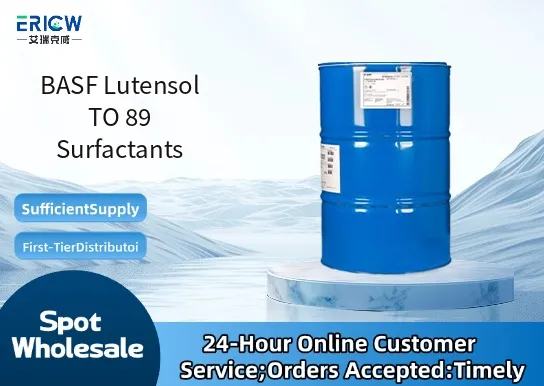
Nonionic surfactant based on linear alcohol ethoxylate with optimized hydrophile-lipophile balance (HLB ≈ 13.5) for balanced emulsification and solubilization.
Excellent low-temperature stability and freeze-thaw resistance in aqueous formulations.
Low foaming profile suitable for high-shear industrial cleaning and metalworking applications.
Good compatibility with electrolytes, acids, and common co-surfactants in complex formulations.
EcoVadis-recognized sustainable profile with readily biodegradable ethoxylate backbone and low aquatic toxicity.
Industrial and institutional (I&I) hard-surface cleaners, including alkaline degreasers.
Metalworking fluids, especially semi-synthetic and soluble oil concentrates.
Agrochemical adjuvants for enhancing active ingredient dispersion and foliar retention.
Textile auxiliaries for scouring, dye leveling, and softener stabilization.
Paint and coating additives for pigment wetting and latex emulsion stabilization.
| Chemical Type | Linear alcohol ethoxylate (C13–C15, ~9 EO units) |
| Product Form | Pale yellow to amber viscous liquid |
| Appearance (25 °C) | Clear to slightly opalescent liquid |
| pH (1% aqueous solution) | 5.0–7.0 |
| Active Content (wt %) | 98–100% |
| Cloud Point (1% aqueous solution) | ≈ 72 °C |
| HLB Value | ≈ 13.5 |
| Key Features | Nonionic, low-foaming, biodegradable, electrolyte-tolerant |
Q1: What is the primary chemical nature of Lutensol TO 89?
A: Lutensol TO 89 is a nonionic surfactant based on a linear alcohol ethoxylate, featuring a C13–C15 alkyl chain and an average of approximately 8–9 moles of ethylene oxide per molecule. Its structure provides balanced hydrophilic-lipophilic properties suitable for emulsification and solubilization in diverse aqueous systems.
Q2: In which types of industrial formulations is Lutensol TO 89 most commonly applied?
A: It is widely used in industrial and institutional cleaning products, metalworking fluids, agrochemical adjuvants, and textile auxiliaries—particularly where stable oil-in-water emulsions, low-foaming performance, and good hard water tolerance are required.
Q3: How does Lutensol TO 89 perform in cold-water applications?
A: Due to its moderate ethoxylation level, Lutensol TO 89 exhibits good solubility and emulsifying activity at ambient and moderately low temperatures, making it suitable for cold-rinse or ambient-temperature cleaning formulations without requiring excessive heating.
Q4: Is Lutensol TO 89 compatible with ionic surfactants and common formulation additives?
A: Yes—it demonstrates broad compatibility with anionic, cationic, and amphoteric surfactants, as well as typical co-solvents, chelants, and corrosion inhibitors. Compatibility should always be verified in the final formulation due to potential interactions under specific pH or concentration conditions.
Q5: What are the recommended handling and storage conditions for this product?
A: Store in original, tightly sealed containers in a cool, dry, and well-ventilated area away from direct sunlight and strong oxidizing agents. Avoid prolonged exposure to freezing temperatures, as crystallization may occur and require gentle warming to redissolve without degradation.
Contact With Us:
E-mail: wangxingqiang@ericwchem.com
Have a Questions? Call Us:
Add:
Building A1, Jiete Industrial Park, Huangpu District, Guangzhou City, Guangdong Province, China