English
 Español
 tiếng việt
 русский
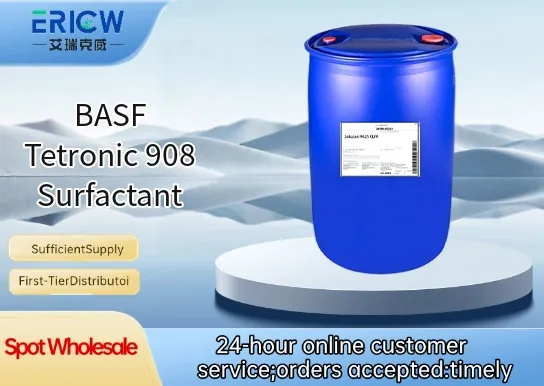
Non-ionic triblock copolymer based on polypropylene oxide (PPO) and polyethylene oxide (PEO) with unique reverse thermogelling behavior.
Excellent solubilizing capacity for hydrophobic actives in aqueous systems across a broad pH range.
Low cytotoxicity and favorable safety profile, supporting use in personal care and pharmaceutical formulations.
Highly effective emulsifier and stabilizer for oil-in-water and microemulsion systems.
Thermo-responsive viscosity modifier — forms reversible gels upon mild heating, enabling controlled-release applications.
Topical pharmaceutical gels and dermal delivery systems.
Stabilized microemulsions for active ingredient solubilization in OTC skincare products.
Viscosity-building agent in low-irritancy shampoos and body washes.
Excipient in injectable and ophthalmic formulations requiring non-ionic, low-hemolytic surfactants.
Template or dispersant in nanomaterial synthesis and functional coatings.
| Chemical Type | Triblock copolymer (PEO-PPO-PEO) |
| Product Form | White to off-white flake or granular solid |
| Appearance | Free-flowing, hygroscopic solid |
| Primary Applications | Pharmaceutical excipient, personal care emulsifier, solubilizer, thermo-responsive gel former |
| Key Features | Reverse thermal gelation, high HLB (~27), non-ionic, biocompatible |
| Benefits | Enables cold-process formulation, improves active stability, reduces skin irritation vs. ionic surfactants |
| Solubility | Freely soluble in water, ethanol, and propylene glycol; insoluble in non-polar solvents |
| Storage Conditions | Store in original container at 15–25 °C, protect from moisture |
Q1: What is the chemical nature of Tetronic 908 and how does it differ from conventional surfactants?
A: Tetronic 908 is a star-shaped polyether-based amphiphile belonging to the Tetronic® family — structurally distinct from linear nonionic surfactants due to its tetrablock architecture with a central ethylenediamine core. This unique topology imparts enhanced interfacial activity, temperature-responsive behavior, and improved solubilization capacity in complex formulations.
Q2: In which types of formulations is Tetronic 908 most commonly used?
A: It is widely employed in pharmaceutical and cosmetic emulsions, topical gels, and microemulsion systems where thermoreversible gelation, low-irritancy profile, and stabilization of oil-in-water or water-in-oil dispersions are required. Its performance is especially valued in dermal delivery systems and aqueous-based personal care products.
Q3: How does Tetronic 908 behave under varying temperature conditions?
A: Tetronic 908 exhibits reverse thermal gelation: it remains liquid at room temperature but forms a physical hydrogel upon gentle warming (typically within physiological or application-relevant ranges). This thermo-sensitive transition is fully reversible and concentration-dependent, making it suitable for controlled-release and on-demand viscosity modulation.
Q4: Is Tetronic 908 compatible with ionic actives and preservatives?
A: Yes — its nonionic, polyether-based structure provides broad compatibility with cationic, anionic, and amphoteric ingredients, including common preservatives (e.g., parabens, phenoxyethanol) and active pharmaceutical ingredients. However, formulation stability should always be confirmed empirically, particularly in high-electrolyte or extreme pH environments.
Q5: What is the typical dosage range for Tetronic 908 in finished products?
A: Dosage depends on the desired functionality — for solubilization or mild emulsification, it is typically used at low concentrations; for thermogelling applications, effective levels generally range from 0.1% to 2% by weight. Optimal use level must be determined through application-specific testing.
Contact With Us:
E-mail: wangxingqiang@ericwchem.com
Have a Questions? Call Us:
Add:
Building A1, Jiete Industrial Park, Huangpu District, Guangzhou City, Guangdong Province, China