English
 Español
 tiếng việt
 русский
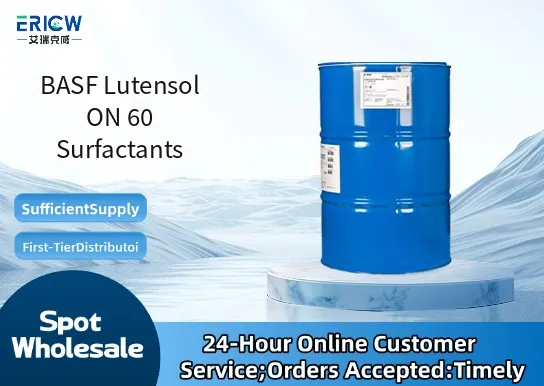
Nonionic surfactant based on ethoxylated octylphenol with high hydrophilic-lipophilic balance (HLB ≈ 13.5).
Excellent emulsifying and solubilizing performance in aqueous systems across a broad pH range.
Good low-temperature stability and freeze-thaw resistance in formulated products.
Low foaming profile, suitable for applications requiring controlled foam generation.
Compatible with anionic, cationic, and other nonionic surfactants in multi-component formulations.
Industrial and institutional cleaners, especially hard-surface degreasers.
Agrochemical formulations including emulsifiable concentrates (EC) and suspension concentrates (SC).
Textile auxiliaries for scouring, dye leveling, and wetting agents.
Paints and coatings as dispersants and co-emulsifiers in water-based systems.
Oilfield chemicals for wellbore cleaning and emulsion breaking aids.
| Chemical Type | Nonionic – Alkylphenol Ethoxylate (APEO) |
| Product Form | Liquid |
| Appearance | Pale yellow to amber viscous liquid |
| Active Content (approx.) | 60 wt.% |
| HLB Value | ~13.5 |
| pH (1% aqueous solution) | 5.0–7.0 |
| Solubility in Water | Freely soluble at room temperature |
| Key Features | Emulsification, solubilization, wetting, low foaming |
Q1: What is the primary chemical nature of Lutensol ON 60?
A: Lutensol ON 60 is a nonionic surfactant based on ethoxylated octylphenol, featuring a hydrophilic polyethylene oxide chain with an average degree of ethoxylation of approximately 60 moles. It is supplied as a viscous, amber-colored liquid and functions primarily as a solubilizer, emulsifier, and wetting agent in aqueous systems.
Q2: Is Lutensol ON 60 suitable for use in low-foaming industrial cleaning formulations?
A: Yes — due to its relatively high ethoxylation level and branched hydrophobic tail, Lutensol ON 60 exhibits low foaming characteristics under shear and in hard water, making it well-suited for applications such as metal cleaning, textile scouring, and CIP (clean-in-place) solutions where foam control is critical.
Q3: How does temperature affect the performance of Lutensol ON 60 in formulations?
A: Lutensol ON 60 displays good thermal stability up to typical processing temperatures used in industrial applications. Its cloud point is sufficiently high to maintain solubility and functionality in warm aqueous systems, though formulation behavior may shift near or above its cloud point — performance should be verified under actual use conditions.
Q4: Can Lutensol ON 60 be used in combination with ionic surfactants?
A: Yes — Lutensol ON 60 is generally compatible with anionic, cationic, and amphoteric surfactants, and synergistic effects are often observed in mixed systems. However, compatibility should be confirmed experimentally for each specific formulation, especially when high electrolyte concentrations or extreme pH values are present.
Q5: What are typical dosage guidelines for Lutensol ON 60 in emulsion polymerization or cleaning concentrates?
A: Dosage depends on the specific application and desired performance, but Lutensol ON 60 is typically used at low concentrations — generally ranging from 0.1% to 2% by weight in finished formulations. Optimal levels should be determined through lab-scale trials to balance emulsion stability, cleaning efficiency, and cost-effectiveness.
Contact With Us:
E-mail: wangxingqiang@ericwchem.com
Have a Questions? Call Us:
Add:
Building A1, Jiete Industrial Park, Huangpu District, Guangzhou City, Guangdong Province, China