English
 Español
 tiếng việt
 русский
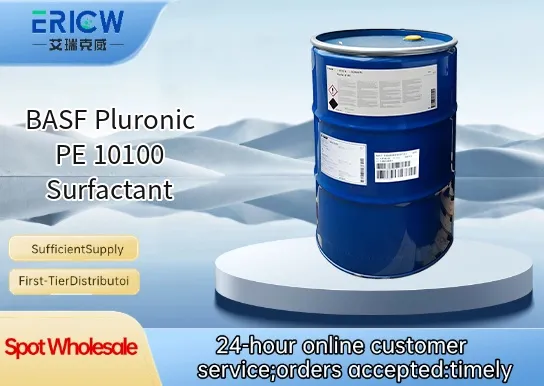
High molecular weight, triblock copolymer structure (PEO–PPO–PEO) delivering exceptional thermal and colloidal stability.
Nonionic, low-foaming surfactant with excellent water solubility across a broad temperature range.
Effective wetting, dispersing, and solubilizing agent for hydrophobic actives in aqueous systems.
Low toxicity profile and compliance with major regulatory frameworks including REACH and US FDA indirect food contact guidelines (21 CFR §173.370).
Stabilizes oil-in-water emulsions without requiring co-surfactants or ionic additives.
Pharmaceutical formulations: solubilizer and stabilizer for poorly water-soluble APIs in injectables and oral suspensions.
Personal care products: viscosity modifier and emulsion stabilizer in high-end creams, sunscreens, and cleansing gels.
Industrial cleaning: key ingredient in low-foam, high-rinsability alkaline and neutral detergents for precision parts cleaning.
Agrochemicals: dispersant and adjuvant for suspension concentrates (SC) and water-dispersible granules (WDG).
| Chemical Type | Tri-block copolymer (Poly(ethylene oxide)-block-poly(propylene oxide)-block-poly(ethylene oxide)) |
| Product Form | White to off-white solid flakes or powder |
| Appearance | Free-flowing, homogeneous granular solid at room temperature |
| Cloud Point (1% aqueous solution) | ~68–72 °C |
| Hydrophilic-Lipophilic Balance (HLB) | ~18.0 |
| Molecular Weight (approx.) | 10,000 g/mol |
| pH (1% aqueous solution, 25 °C) | 5.5–7.0 |
| Primary Applications | Emulsion stabilization, solubilization, dispersion, wetting, and rheology modification |
Q1: What is the primary chemical structure and classification of Pluronic PE 10100?
A: Pluronic PE 10100 is a polyether-based nonionic surfactant belonging to the Pluronic® family, composed of a central hydrophobic polypropylene oxide (PPO) block flanked by two hydrophilic polyethylene oxide (PEO) blocks. It is classified as a triblock copolymer with high PEO content, contributing to its strong water solubility and low foaming profile.
Q2: In which types of industrial formulations is Pluronic PE 10100 most commonly used?
A: This surfactant is frequently employed in demanding applications such as high-performance cleaning concentrates, agrochemical adjuvants, pharmaceutical solubilizers, and specialty coatings—where thermal stability, low-foam behavior, and compatibility with electrolytes are critical performance requirements.
Q3: How does Pluronic PE 10100 perform under elevated temperature or high-salt conditions?
A: Due to its high ethylene oxide content and robust polyether architecture, Pluronic PE 10100 maintains good colloidal stability and surfactant efficacy at elevated temperatures and in the presence of moderate concentrations of inorganic salts—making it suitable for formulations requiring thermal and ionic robustness.
Q4: Is Pluronic PE 10100 compatible with anionic and cationic surfactants?
A: While Pluronic PE 10100 is generally compatible with many anionic surfactants in mixed systems, direct combination with strongly cationic species may lead to reduced solubility or phase separation depending on concentration and pH. Compatibility should be verified experimentally in the target formulation matrix.
Contact With Us:
E-mail: wangxingqiang@ericwchem.com
Have a Questions? Call Us:
Add:
Building A1, Jiete Industrial Park, Huangpu District, Guangzhou City, Guangdong Province, China