English
 Español
 tiếng việt
 русский
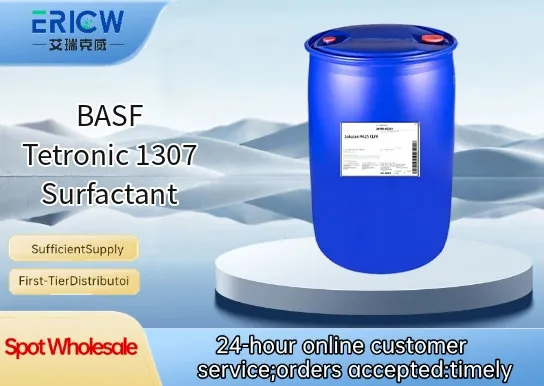
Non-ionic triblock copolymer based on polypropylene oxide (PPO) and polyethylene oxide (PEO) with PEO-PPO-PEO architecture.
Excellent surface activity and low critical micelle concentration (CMC), enabling efficient stabilization at low dosages.
Highly effective solubilizer for hydrophobic actives in aqueous systems, including fragrances, UV filters, and essential oils.
Thermoresponsive behavior with reversible micellization, supporting temperature-triggered release and formulation versatility.
Good compatibility with electrolytes and a broad pH range (pH 3–11), ensuring robust performance in complex formulations.
Personal care emulsions: oil-in-water creams, gels, and serums requiring mild, non-irritating emulsification.
Pharmaceutical delivery systems: solubilization and stabilization of poorly water-soluble APIs in oral liquids and topical solutions.
Agrochemical formulations: adjuvant for enhancing foliar uptake and rainfastness of active ingredients in crop protection products.
Industrial cleaning: low-foaming surfactant in high-efficiency detergents for precision cleaning and metalworking fluids.
Nanomaterial dispersion: stabilizer for carbon nanotubes, graphene, and metal oxide nanoparticles in aqueous suspensions.
| Chemical Type | Non-ionic PEO-PPO-PEO triblock copolymer |
| Product Form | Pale yellow to amber viscous liquid |
| Appearance | Clear to slightly hazy, homogeneous liquid at 25°C |
| pH (1% aqueous solution) | 5.5 – 7.5 |
| Solubility | Freely soluble in water, ethanol, and propylene glycol; partially soluble in mineral oil |
| Cloud Point (1% aqueous solution) | ~68–72°C |
| HLB Value | ~17.5 |
| Storage Stability | Stable for ≥24 months at 5–30°C in sealed original container |
Q1: What is the primary functional role of Tetronic 1307 in formulations?
A: Tetronic 1307 is a thermoresponsive, nonionic polyether-based surfactant primarily used for its dual functionality as an emulsifier and stabilizer—especially in temperature-sensitive systems such as microemulsions, nanostructured gels, and controlled-release carriers.
Q2: Is Tetronic 1307 suitable for aqueous personal care or pharmaceutical applications?
A: Yes—Tetronic 1307 is widely employed in aqueous-based dermal and mucosal formulations due to its low irritation potential, good solubilization capacity for lipophilic actives, and ability to form micellar or gel-phase structures upon mild heating, which supports enhanced delivery and sensory properties.
Q3: How does Tetronic 1307 behave with respect to temperature changes?
A: It exhibits reversible thermo-gelling behavior: remaining fully soluble and fluid at ambient temperatures, then undergoing micellization and physical gelation upon gentle warming—typically within a range that allows processing flexibility without thermal degradation.
Q4: Can Tetronic 1307 be combined with ionic surfactants or electrolytes?
A: It demonstrates reasonable compatibility with many anionic and cationic species at moderate concentrations; however, high electrolyte levels may reduce its cloud point and affect micellar stability—formulation screening is recommended to confirm performance under specific ionic strength conditions.
Q5: What are typical dosage guidelines for Tetronic 1307 in finished products?
A: Dosage depends on formulation requirements but generally ranges from 0.1% to 2% by weight—lower levels often suffice for solubilization, while higher concentrations support structured gel formation or enhanced stabilization of dispersed phases.
Contact With Us:
E-mail: wangxingqiang@ericwchem.com
Have a Questions? Call Us:
Add:
Building A1, Jiete Industrial Park, Huangpu District, Guangzhou City, Guangdong Province, China